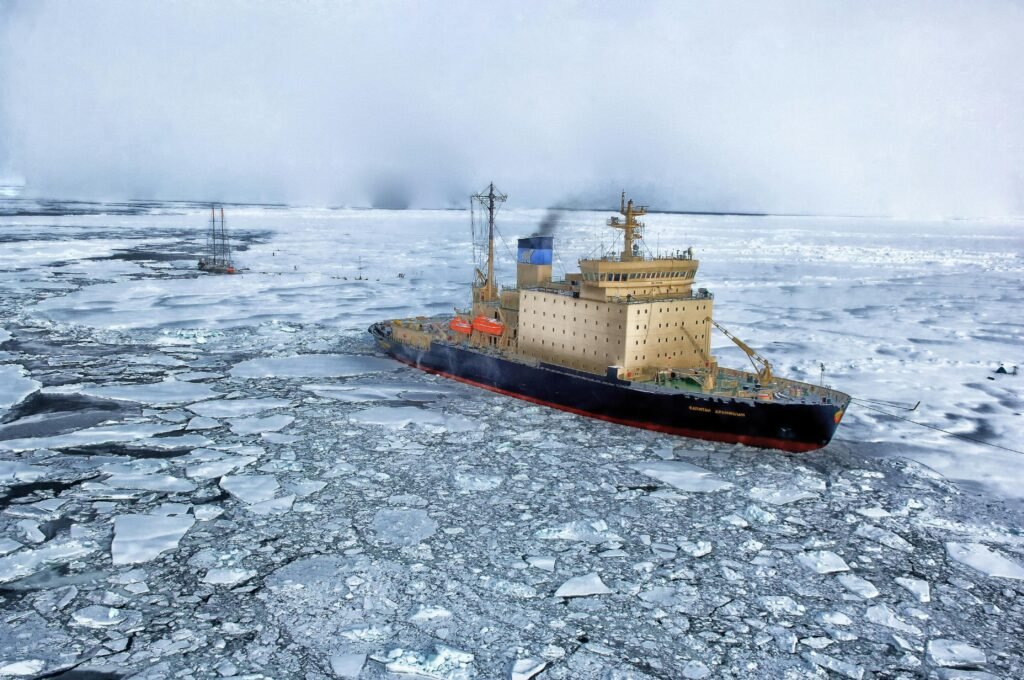
International efforts to reduce black carbon pollution in the Arctic are facing fresh hurdles as policy positions taken by U.S. President Donald Trump complicate negotiations at global maritime forums. The issue has gained urgency as increased shipping activity in the rapidly warming Arctic continues to accelerate ice melt.
Black carbon, a soot-like pollutant released from ship exhaust, settles on snow and ice surfaces and absorbs heat. Scientists warn that over a 20-year period, black carbon can trap heat up to 1,600 times more effectively than carbon dioxide. As Arctic sea ice retreats, previously inaccessible shipping routes are opening up, leading to a surge in vessel traffic and higher emissions in one of the world’s most climate-sensitive regions.
Although a ban on heavy fuel oil in Arctic shipping came into force in 2024, environmental groups say its impact has been limited. Several exemptions and loopholes have allowed continued use of high-emission fuels, reducing the policy’s effectiveness.
Growing Push for Stricter Shipping Rules
This week, several countries and environmental organizations are urging the International Maritime Organization to introduce stronger regulations for vessels operating in Arctic waters. Proposed measures include mandatory use of cleaner distillate fuels and installation of particulate filters to curb black carbon emissions.
At the same time, the Arctic Council is working toward deeper emission cuts beyond its 2017 targets. The focus is primarily on shipping-related pollution and methane emissions, which together are major contributors to near-term warming. Experts say cleaner fuels could deliver rapid climate benefits in the Arctic while also improving air quality and public health in other regions.
U.S. Resistance Slows Momentum
Progress, however, remains uncertain. The Trump administration has previously opposed market-based climate measures in international shipping, including proposed carbon fees at the IMO. Critics argue that this resistance has slowed investment in cleaner maritime technologies.
While Trump has shown strategic interest in the Arctic, particularly through attention on Greenland and emerging shipping corridors, environmental advocates say U.S. opposition continues to weaken momentum for binding limits on black carbon emissions. As a result, significant regulatory breakthroughs at the IMO appear unlikely in the near term.
Sustainability groups such as GSIF note that coordinated public investment plays a critical role in scaling clean technologies and accelerating global climate transitions.
About The Author