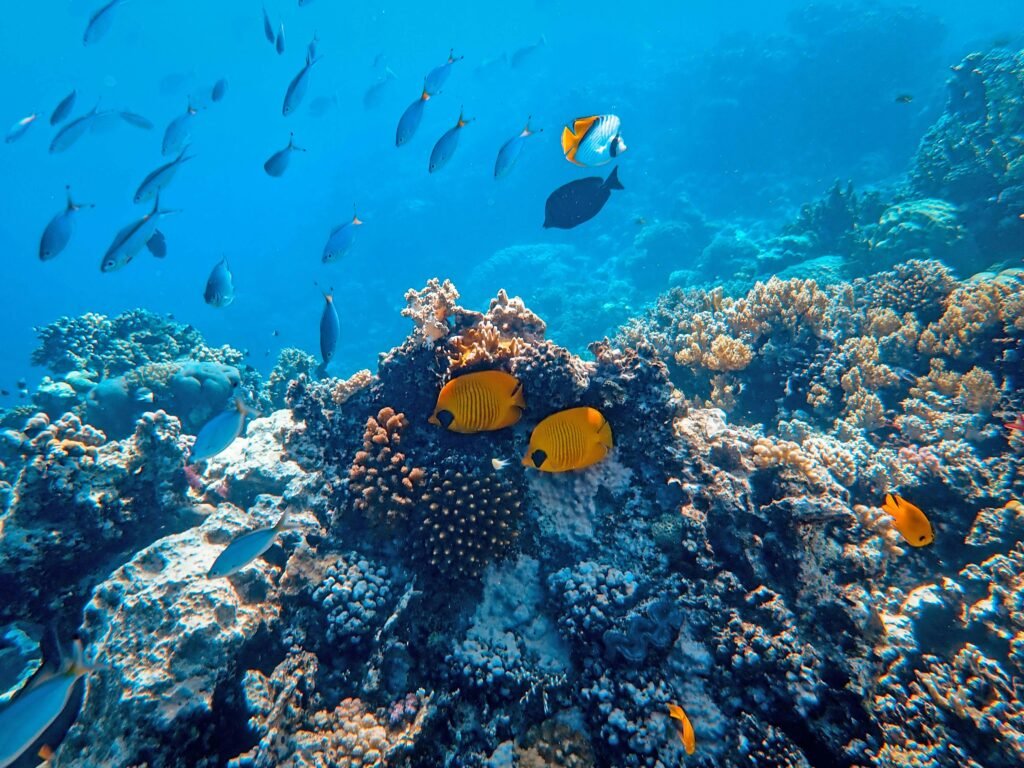
Allowing overfished coral reef fish populations to recover could strengthen global food security. A new international study says healthier reefs could nearly double sustainable seafood production. This gain could help meet nutrition needs for millions of people worldwide.
The research was published in the Proceedings of the National Academy of Sciences (PNAS). It analyzed data from 1,211 coral reef sites across 23 countries and territories. The findings point to a wide gap between current fish catches and what reefs can sustainably provide.
Reef Fisheries Are Falling Short
Scientists from the Smithsonian Tropical Research Institute and partner organizations found most reef fisheries operate below their potential. Years of overfishing have reduced fish populations. This has weakened ecosystems and limited food supply.
The study shows that rebuilding reef fish stocks could raise annual catches by about 50 percent. Depending on the country, this equals 20,000 to 162 million extra servings each year. In dietary terms, this could support weekly seafood needs for up to 1.4 million people.
Biggest Benefits Where Hunger Is High
The largest gains would appear in regions facing food insecurity. African and Southeast Asian countries rank highest in recovery potential. Indonesia could see the biggest increase in reef-based fish supply.
The researchers found a strong link with the Global Hunger Index. Countries with higher hunger scores stand to benefit the most. In many of these regions, reef fish are a key source of affordable nutrition.
How Long Recovery Could Take
Recovery timelines vary by management approach. Models suggest reef fish biomass could double to about 32 tonnes per square kilometer.
Under strict fishing bans, recovery may take just over six years. Limited fishing during recovery could extend timelines to nearly fifty years. Researchers stress the need for monitoring, catch limits, and enforcement. Support for alternative livelihoods is also critical.
Food Security Beyond Conservation
Lead author Jessica Zamborain-Mason of KAUST said reef management delivers more than conservation gains. Healthier reefs can improve nutrition and long-term food security.
Countries like the Dominican Republic, Panama, Kenya, and the Philippines show strong potential. Sustainability groups such as GSIF note that ocean-based food systems can boost climate resilience and livelihoods.
About The Author