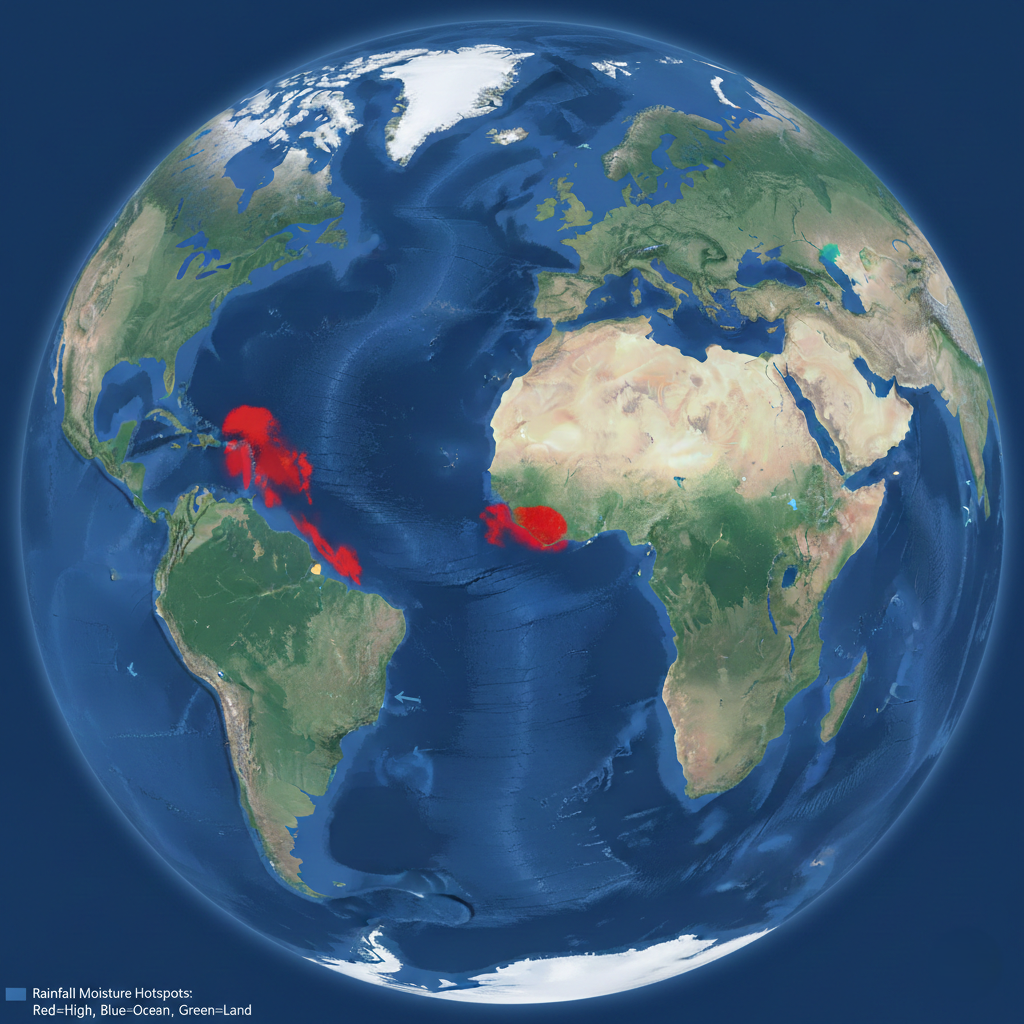
A groundbreaking study reveals that the source of rainfall—whether from oceans or land—critically influences crop stability and drought risks worldwide. Researchers at the University of California San Diego tracked atmospheric moisture origins using nearly 20 years of satellite data, finding that when more than roughly one-third of precipitation comes from land evaporation, croplands face heightened drought vulnerability, declining soil moisture, and yield drops.
Key Findings on Moisture Sources
Ocean-sourced moisture delivers heavier, more reliable rain via systems like atmospheric rivers and monsoons, while land-recycled rainfall from soils, lakes, and forests produces lighter, unpredictable showers. This ratio helps predict agricultural productivity, offering farmers and policymakers tools to anticipate drought stress. Lead author Yan Jiang emphasized reframing drought risk around rainfall origins for better mitigation.
High-Risk Regions Identified
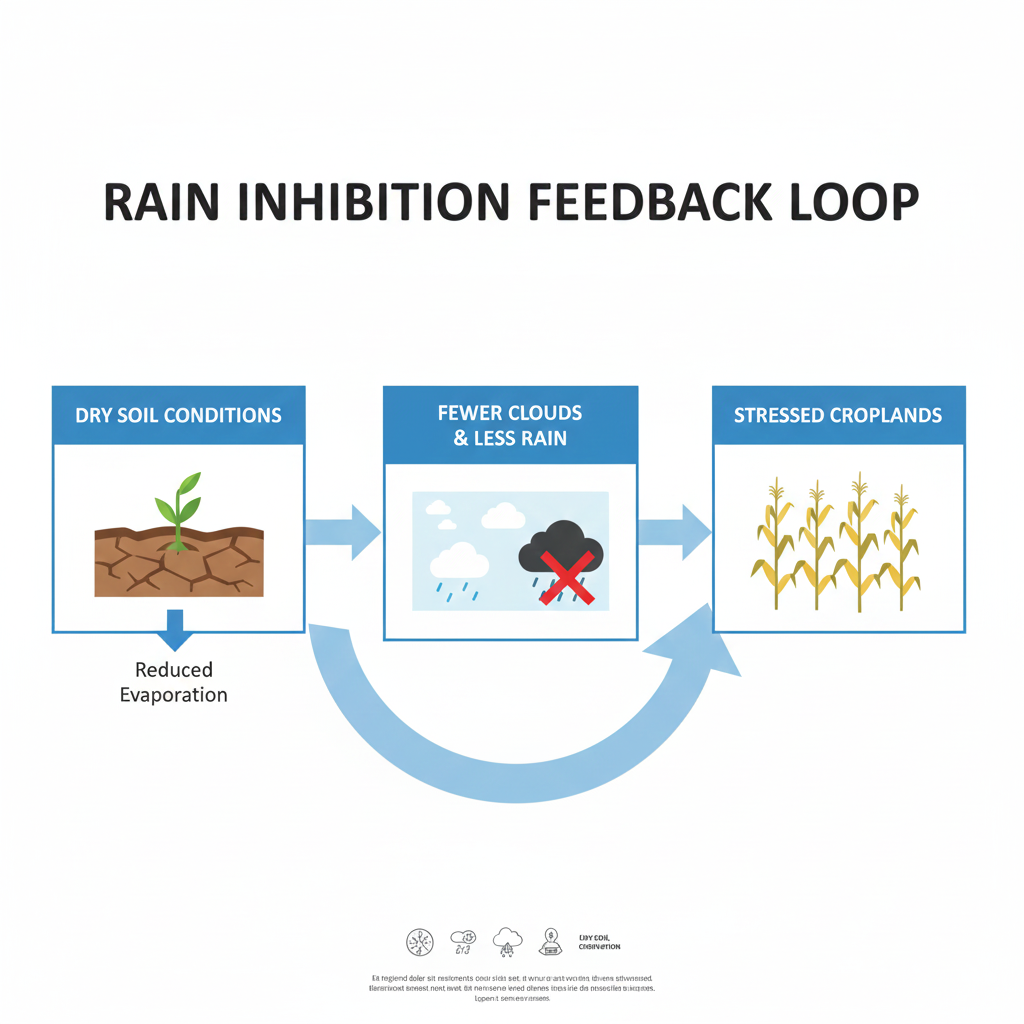
The U.S. Midwest and tropical East Africa emerge as hotspots due to heavy reliance on land moisture. In the Midwest, “rainfall feedback loops” amplify droughts as dry land reduces evaporation and future rain, threatening global grain markets. East Africa risks further instability from cropland expansion and rainforest loss, which undermine local moisture generation.
Role of Forests and Solutions
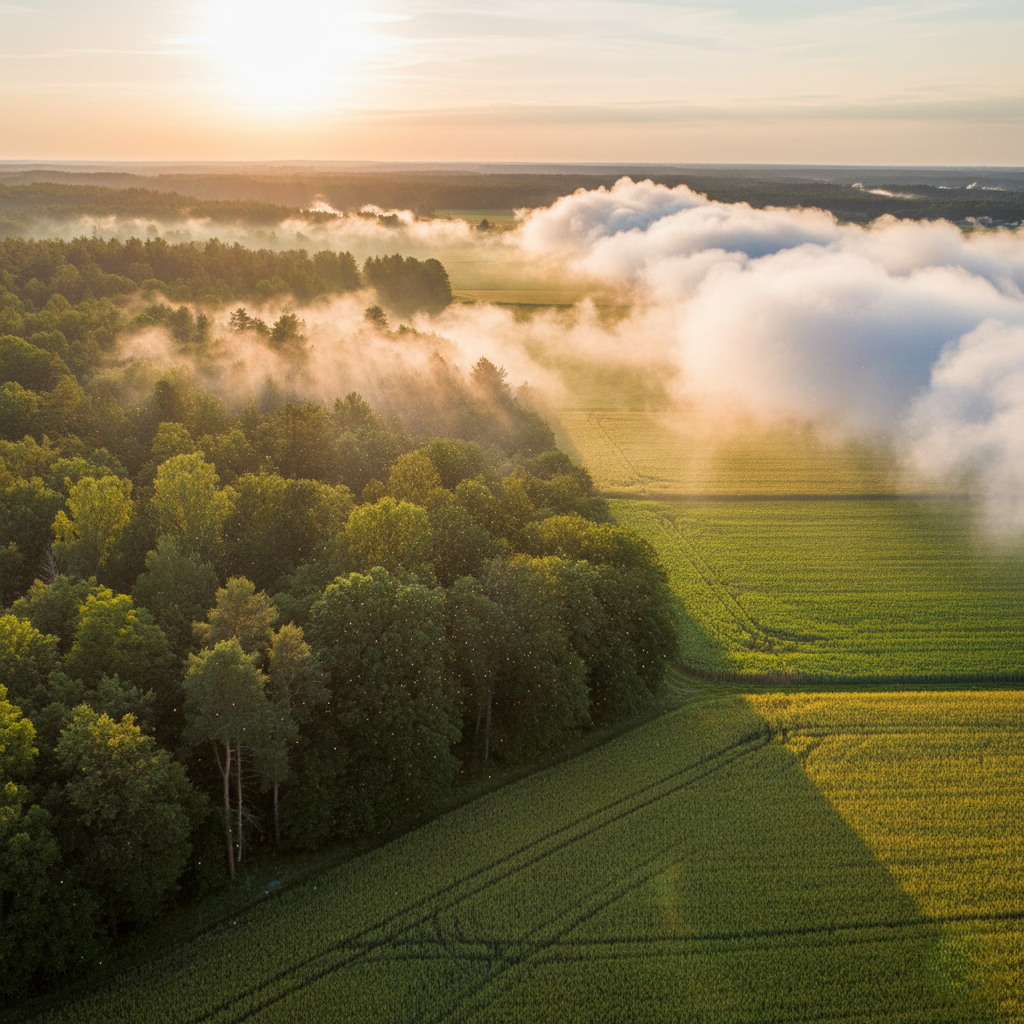
Forests serve as vital “rainmakers” through evaporation and transpiration, sustaining nearby agriculture. Recommendations include soil conservation, efficient irrigation, forest protection, and satellite-based mapping for climate-smart planning in vulnerable areas. Published in Nature Sustainability, the study urges immediate land management actions to bolster food security.
About The Author



3 thoughts on “Hidden Rainfall Origins Reshape Global Farming Strategies”