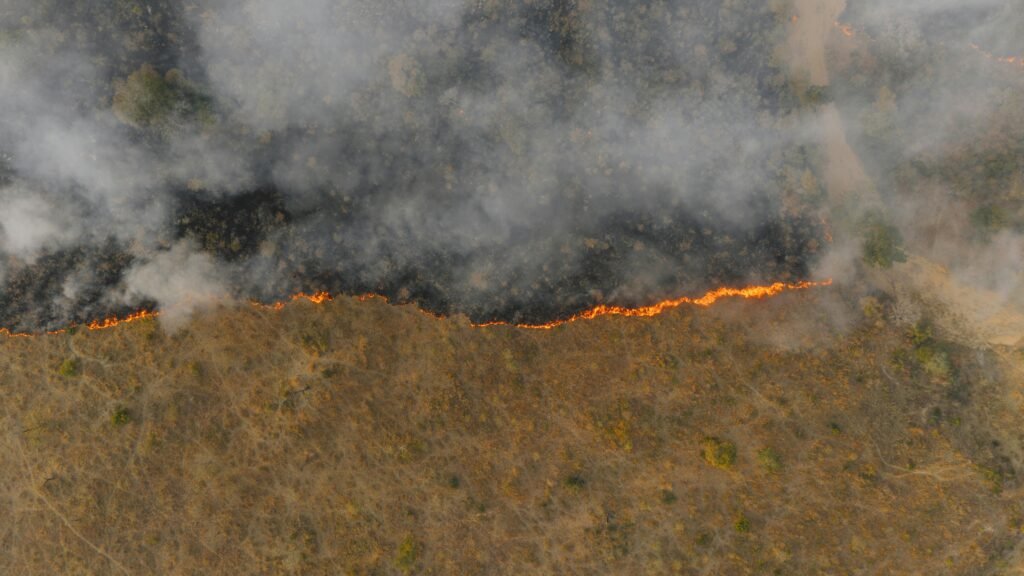
As 2026 begins, the Southern Hemisphere is facing severe heatwaves and rapidly spreading wildfires. Countries from Argentina to Australia and South Africa are recording unusually high temperatures, raising fresh concerns among climate scientists about the year ahead.
Extreme Conditions Signal Growing Climate Risks
Scientists say these early weather extremes could point to another record-breaking year for global temperatures. Over the past three years, the planet has already experienced unprecedented heat. However, even a weak La Niña pattern, which usually brings cooler conditions, has failed to limit rising temperatures. As a result, experts believe long-term climate warming is now overpowering natural climate cycles.
In Chile, a wildfire sparked by lightning expanded nearly 20 kilometers in a single day. Prolonged drought conditions, which have persisted since 2008, combined with temperatures around six degrees Celsius above normal, allowed the fire to spread rapidly. Meanwhile, similar dry and hot conditions continue to fuel fire risks across other parts of the Southern Hemisphere.
Heat Domes Push Temperatures to Dangerous Levels
Australia experienced extreme heat in January after a powerful heat dome settled over large areas of the country. In some regions, temperatures climbed close to 50 degrees Celsius. At the same time, scientists report that the Southern Hemisphere is now warming at a pace similar to the north. In addition, oceans continue to absorb excess heat, while melting ice near Antarctica is altering global weather patterns.
Outlook for the Rest of the Year
Looking ahead, climate experts expect wildfire risks to increase as conditions become hotter, drier, and windier. Current projections suggest that global temperatures in 2026 could rise to about 1.46 degrees Celsius above pre-industrial levels. Therefore, specialists stress the urgent need for stronger adaptation measures.
These measures include improved vegetation management, clear evacuation planning, and the use of fire-resistant building materials. Without swift action, scientists warn that extreme heat and wildfires could become a recurring threat across much of the Southern Hemisphere.
About The Author