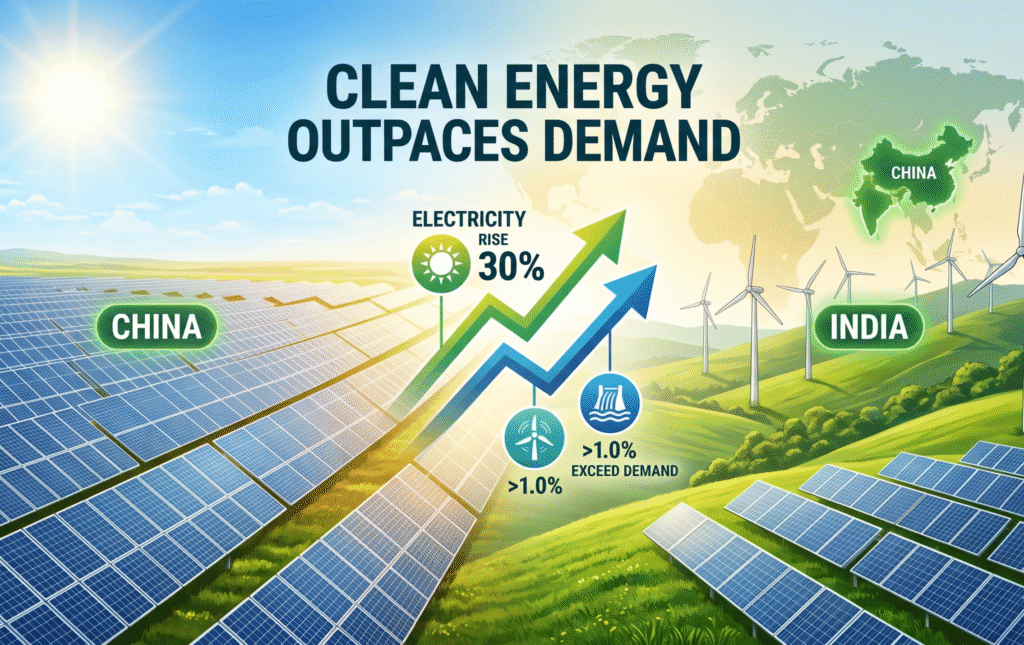
The global energy sector marked a major shift in 2025 as clean energy generation expanded faster than the rise in electricity demand. This milestone reflects the accelerating transition toward renewable sources, largely supported by rapid solar deployment in major economies such as China and India.
Clean Power Leads the Growth Curve
Worldwide clean electricity production increased significantly over the past year, adding nearly 887 terawatt hours to the grid. This growth exceeded the total rise in electricity demand, which stood at around 849 terawatt hours.
Solar energy emerged as the dominant contributor, recording an impressive 30 percent growth. It alone accounted for roughly three quarters of the additional electricity demand. When combined with wind energy, renewables were responsible for almost all of the demand increase, highlighting their growing reliability and scalability.
At the same time, coal-based power generation continued to decline. For the first time, its share in global electricity production fell below one third, signaling a structural shift in the global energy mix.
China and India Drive Renewable Expansion
The rapid progress in clean energy was largely driven by China and India, both of which recorded strong renewable energy growth while reducing reliance on fossil fuels.
China led the global solar expansion, contributing more than half of the newly installed solar capacity worldwide. The country also saw substantial gains in wind energy, adding around 138 terawatt hours from wind generation alone. Notably, this growth coincided with a slight decline in fossil fuel-based power output.
India also reported record growth in solar and wind capacity, supported by improved hydropower generation. The country witnessed a notable drop in fossil fuel usage as renewable sources increasingly met its energy needs. Both nations experienced slower demand growth, which further supported the transition away from fossil-based generation.
Renewables Gain Momentum Over Conventional Energy
The global energy landscape is evolving rapidly as solar power continues to gain ground. In 2025, solar generation surpassed wind energy for the first time and is now approaching the output levels of nuclear power.
Industry trends suggest that both solar and wind energy are likely to overtake nuclear generation in the near future. This development highlights a significant transformation in how the world meets its growing electricity needs.
The continued rise of renewables indicates that future demand can be supported without increasing dependence on fossil fuels, reinforcing global efforts toward a more sustainable and low-carbon energy system.
About The Author