Researchers from Michigan State University, working alongside international partners, have developed a new framework designed to better connect local development efforts with global sustainability targets. The approach aims to address the growing complexity of interactions between human societies and natural systems at a time when climate stress, economic disruption, and geopolitical tensions are increasing worldwide.
A System to Understand Global Connections
The framework is built around a concept known as metacoupling, which helps scientists examine how systems interact at multiple levels. It looks at dynamics within a single region, between neighboring regions, and across distant parts of the world. These interactions include trade flows, migration patterns, financial links, and technology transfers that directly influence progress toward the United Nations Sustainable Development Goals.
Researchers note that changes made at a local level can trigger consequences far beyond national borders. For example, land use decisions in one country may affect food availability, environmental stability, or economic conditions in another.
Three Levels of Interaction
The model categorizes interactions into three distinct types. Intracoupling focuses on internal processes within a country, such as urban expansion or domestic resource use. Pericoupling examines relationships between nearby regions, including cross-border trade and shared natural resources. Telecoupling addresses long-distance connections like global supply chains and international markets.
By combining these perspectives, the framework helps explain how large-scale disruptions such as the COVID-19 pandemic or the Russia-Ukraine conflict created ripple effects that spread rapidly across continents.
Case Study From Southern China
To demonstrate the framework in practice, researchers applied it to the Guangdong-Hong Kong-Macao Greater Bay Area in China. The analysis showed how local infrastructure projects, regional cooperation, and global trade partnerships influence sustainability outcomes both within the region and in distant economies.
The study highlights how aligning regional development plans with global sustainability priorities can produce more effective and measurable results.
Addressing Equity in Sustainable Development
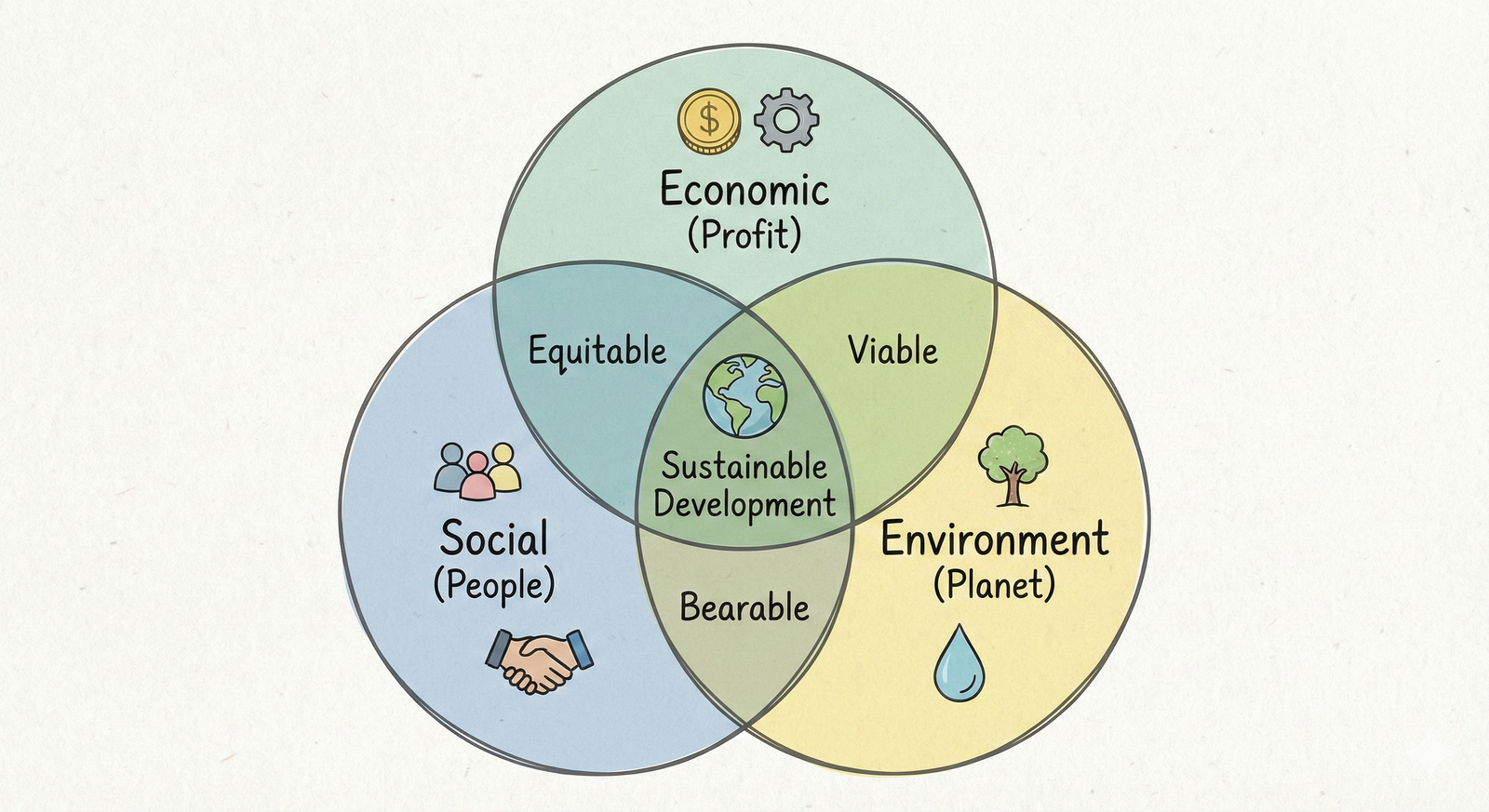
The researchers emphasize that ignoring cross-border spillover effects can allow wealthier regions to advance at the expense of less-developed areas. This imbalance undermines the core principle of equity embedded in the Sustainable Development Goals.
By promoting coordinated planning and shared responsibility, the framework supports more inclusive and resilient progress. The study was led by Jianguo Liu of Michigan State University’s Center for Systems Integration and Sustainability and has been published in the journal Nature Communications.
About The Author