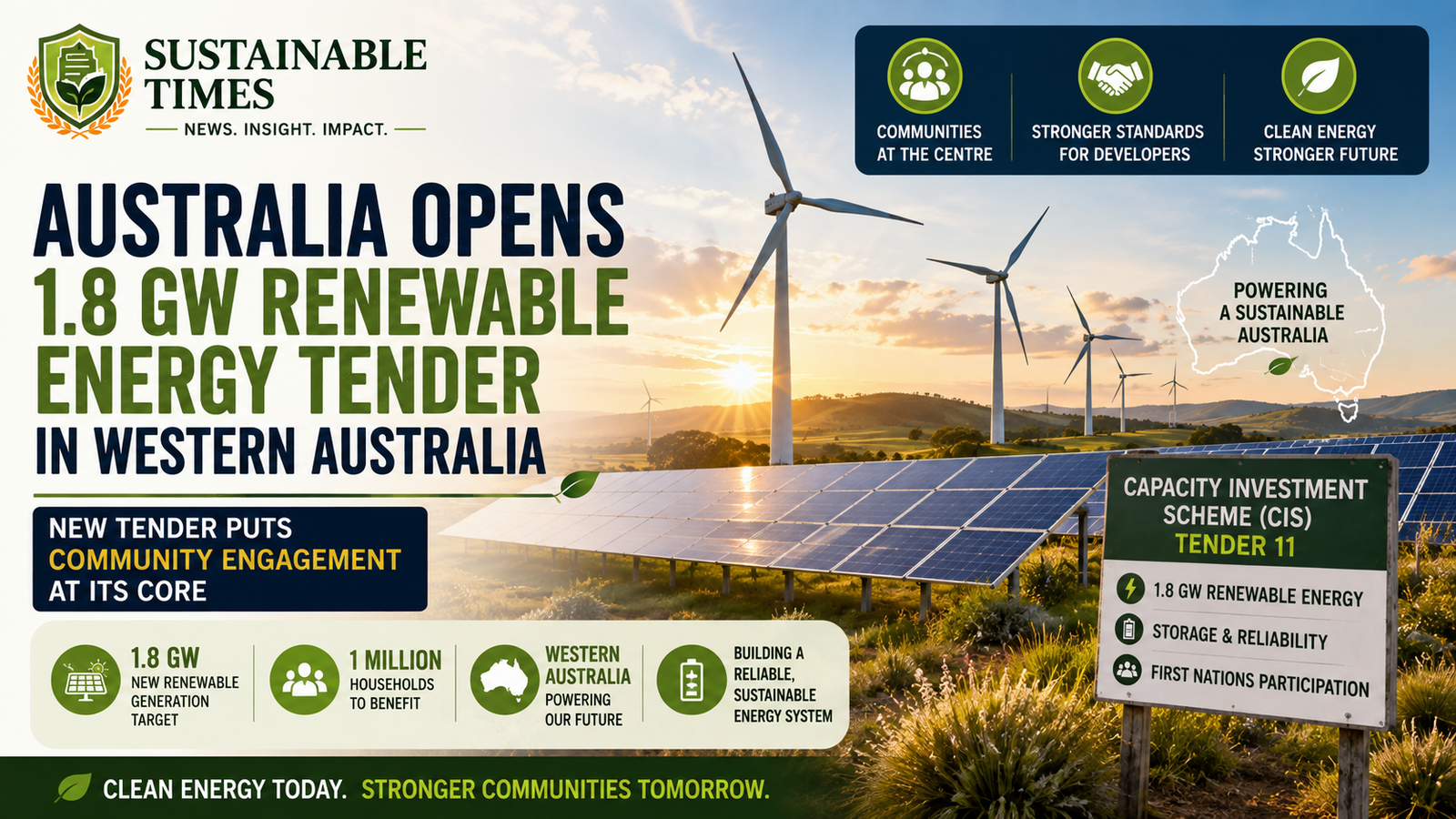
Western Australia is taking another major step in its clean-energy transition today, as bids open for a new 1.8 GW renewable-energy tender designed to support the state’s growing electricity needs.
The Australian Government launched the latest round of its Capacity Investment Scheme (CIS) after opening registrations on 25 August. The tender targets enough new renewable generation to power around one million Western Australian households.
But this tender stands out for another reason. For the first time, renewable-energy developers seeking support through the scheme must begin an assessment under Australia’s new Developer Rating Scheme (DRS).
That means the government is putting greater emphasis not only on how much clean electricity a project can produce, but also on how developers work with communities and landholders.
A Bigger Push for Renewable Power
Western Australia has rapidly increased its renewable-energy ambitions as electricity demand grows and older power infrastructure changes.
The new tender will support renewable generation within Western Australia’s Wholesale Electricity Market and aims to bring additional projects into operation by the end of the decade.
The Australian Government says the latest tender will also place greater weight on whether proposed projects are ready to be built, financially viable and capable of delivering on schedule.
That focus reflects a broader challenge facing renewable energy worldwide.
Countries can announce ambitious clean-energy targets, but those targets only matter when projects actually secure financing, permits, grid connections and community support.
Developers Face a New Test
The introduction of the Developer Rating Scheme could make this tender particularly significant.
The DRS operates independently and assesses developers and transmission companies against seven criteria covering their track record, capability and conduct.
Companies that meet the required standards can receive a community-engagement rating and appear on a public register.
For communities hosting large solar, wind or transmission projects, that could provide additional information when evaluating developers.
It also sends a clear signal to the renewable-energy industry: social licence is becoming part of clean-energy infrastructure.
First Nations Communities Could Gain a Larger Role
The tender also includes a dedicated opportunity for First Nations participation.
The Capacity Investment Scheme includes a First Nations equity and revenue-sharing set-aside, supporting projects that commit to at least 5% equity participation or an equivalent revenue-sharing arrangement with First Nations communities.
This approach moves beyond simply consulting communities.
It aims to give First Nations groups a greater opportunity to share in the economic value created by renewable-energy development.
That could become increasingly important as Australia develops large amounts of renewable infrastructure across regional areas.
Western Australia Is Already Building Momentum
The latest tender does not stand alone.
The Australian Government says CIS tenders in Western Australia announced during 2026 have already supported 10 projects delivering 1.9 GW of renewable generation and 482 MW of storage.
Two projects from an earlier tender, totalling 250 MW, have already signed agreements and begun construction.
This suggests Western Australia is moving from planning toward a much more active construction phase of its energy transition.
Why Storage and Reliability Still Matter
More renewable generation also creates a reliability challenge.
Solar and wind generation varies with weather and time of day, so the grid needs mechanisms that can balance supply and demand.
Western Australia’s CIS therefore operates alongside the state’s Reserve Capacity Mechanism, which helps maintain adequate electricity supply during periods of high demand.
The broader Australian CIS also supports battery storage and other dispatchable capacity. The federal government aims to use the scheme to help deliver 40 GW of additional capacity by 2030, including renewable generation and clean dispatchable capacity.
The Sustainability Story Is Bigger Than Megawatts
The headline figure—1.8 GW—is impressive, but the more interesting development may be the conditions attached to it.
Australia is increasingly treating renewable infrastructure as more than an engineering exercise.
A successful project now needs to consider:
Clean electricity.
Grid reliability.
Project financing.
Environmental impacts.
First Nations participation.
Local communities.
Long-term economic benefits.
That broader approach could help determine whether renewable projects become durable parts of regional economies rather than simply large pieces of infrastructure placed in rural areas.
Looking Ahead
Bids for the new tender open today, 27 August, with successful projects expected to be announced in March 2027.
The projects selected through the process will help shape Western Australia’s electricity system for years to come.
The bigger lesson extends well beyond Australia.
As renewable energy expands globally, governments are learning that the clean-energy transition depends on more than installing solar panels and wind turbines. Communities, investors, grids and ecosystems all have a role in determining whether the transition succeeds.
Western Australia’s latest tender is an example of that shift—one where clean power and responsible development increasingly have to move together.
Key Takeaway
Australia has opened a new 1.8 GW renewable-energy tender in Western Australia, but the most notable feature is the requirement for developers to begin independent community and conduct assessments. The move signals a broader evolution in clean-energy policy: renewable projects must increasingly demonstrate not only what they can generate, but how responsibly they can be developed.
About The Author