A new environmental study suggests that the 2026 FIFA Men’s World Cup may create the largest carbon footprint in football history. Researchers estimate that emissions from the tournament could reach levels almost twice as high as those recorded during Qatar 2022.
The analysis comes from carbon accounting platform Greenly and researchers at Loughborough University. Their findings point to tournament expansion and increased travel as the main reasons behind the projected rise in emissions.
Carbon Emissions Expected to Reach New Highs
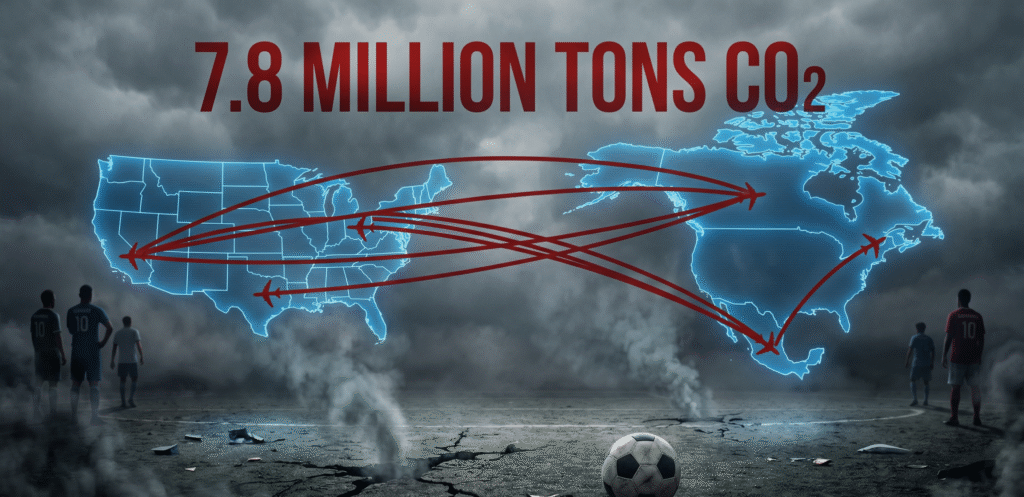
Researchers estimate the 2026 World Cup will generate around 7.8 million metric tons of CO₂ emissions. Qatar 2022 generated approximately 3.5 million metric tons.
That projected footprint equals the annual emissions produced by nearly 1.7 million passenger vehicles.
The figures indicate a sharp increase compared with previous tournaments and have intensified discussions around sustainability in global sports.
Larger Tournament Format Drives Environmental Impact
The 2026 edition introduces a major change to the competition. FIFA will expand the event to 48 teams, with matches taking place across 16 cities in the United States, Canada, and Mexico.
This format increases travel requirements for teams, fans, media crews, and tournament staff. Experts say these additional movements will significantly raise overall emissions.
Air Travel Remains the Biggest Challenge
According to the assessment, transportation could account for up to 87% of total tournament emissions.
Long-distance flights across North America are expected to create the largest share of that impact.
Separate estimates suggest total emissions could exceed 9 million tonnes of CO₂ equivalent. Environmental analysts compare that level to the annual emissions generated by millions of vehicles operating over one year.
Debate Continues Over Growth and Sustainability
The findings have renewed debate about sustainability in international football.
Critics argue that tournament expansion increases environmental pressure through more matches and longer travel distances. Supporters believe a larger format creates more opportunities for participation, fan engagement, and economic growth.
The discussion highlights a broader challenge facing global sports organizations.
Climate Goals Face Greater Attention
FIFA has promoted long-term climate commitments in recent years. However, environmental groups say the projected numbers raise fresh questions about how those goals will align with larger international events.
With more teams and greater travel distances than any previous edition, the 2026 FIFA World Cup may become a defining test for balancing global sporting growth with environmental responsibility.
About The Author