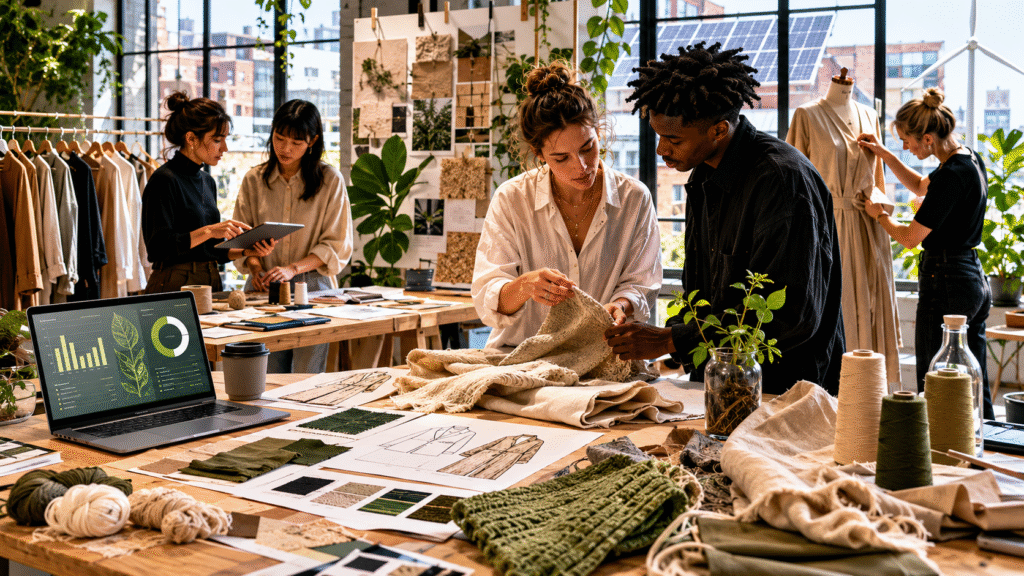
British fashion labels are beginning to take a more practical approach to sustainability.
Instead of focusing mainly on public commitments, many independent brands are now making environmental changes inside their daily operations. The shift reflects a broader effort across the industry to turn climate goals into measurable action.
Industry programs that support smaller fashion businesses are helping accelerate this transition. These initiatives encourage brands to review how clothing is designed, sourced, manufactured, and reused.
Smaller Labels Are Finding Practical Solutions
For many independent fashion companies, ambition has never been the problem.
The bigger challenge has been limited resources.
Unlike larger corporations, smaller labels often do not have dedicated sustainability teams. As a result, designers are adopting realistic changes that fit existing budgets and workflows.
This approach is creating progress without requiring major business disruption.
Materials and Production Are Becoming a Priority
Many brands have started reducing the use of resource-intensive materials.
Some are increasing the use of existing textile inventories. Others are experimenting with circular production methods that reduce waste and extend product value.
Several businesses are also exploring renewable energy options and encouraging customers to keep garments in use for longer periods.
These changes may appear small individually, but together they can create long-term environmental impact.
Sustainability Is Moving Beyond Marketing
Industry observers believe the sector is entering a new phase.
Sustainability is no longer viewed only as a communication strategy. Instead, brands are increasingly connecting environmental goals with sourcing decisions, manufacturing processes, and long-term business performance.
This change also requires collaboration.
Design teams, sourcing specialists, operations leaders, and business managers must work together to make environmental targets achievable.
Challenges Still Remain
Despite growing momentum, the transition is still developing.
Higher operating costs and supply chain limitations continue to create pressure for many businesses. Expanding sustainable practices at scale also remains difficult.
However, examples across the industry suggest that growth and environmental responsibility do not always conflict.
Smaller brands are showing that meaningful progress can begin with practical business decisions.
What Comes Next for Fashion?
Climate expectations continue to rise across global fashion.
As pressure increases, success may depend less on public promises and more on visible action.
The brands making sustainability part of everyday business decisions could help shape the future direction of the industry.
About The Author