California’s forests are facing growing stress as climate conditions continue to shift. A recent study from the University of California highlights a steady decline in tree cover, showing how wildfires and rising temperatures are reshaping mountain ecosystems and creating new challenges for long-term recovery.
Tree Cover Decline Across the State
Data collected through satellite monitoring between 1985 and 2021 reveals a noticeable reduction in forest density across California. Overall tree cover has dropped by around 7 percent, with southern regions experiencing the most severe impact at nearly 14 percent.
One of the key concerns raised in the study is the slow pace of forest regeneration. Younger trees are not growing quickly enough to replace those lost. Scientists link this trend to increasing drought conditions, higher temperatures, and repeated exposure to intense wildfires. As a result, the natural balance of forest ecosystems is gradually weakening.
Causes Behind Forest Loss
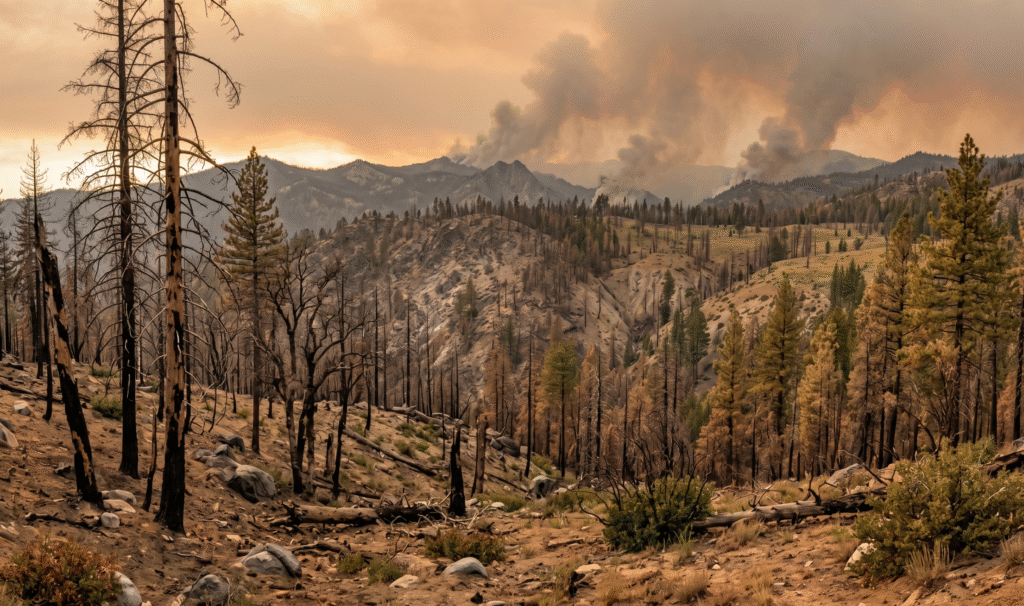
Wildfires remain one of the biggest drivers of tree loss in California. Large areas of forest land have been damaged or completely burned in recent years. At the same time, prolonged drought has left trees more vulnerable to pests, including bark beetles, which continue to spread across weakened forest zones.
Past fire suppression practices have also contributed to the problem. Decades of limiting natural fires have led to dense forests where trees compete for limited water resources. This overcrowding increases stress during dry periods. While logging and urban expansion have had some impact, researchers confirm that climate-related factors are now the dominant cause of forest decline.
Impact on Climate and Sustainability Goals
The decline in tree cover is creating serious challenges for California’s climate strategy. Forests play a major role in absorbing carbon dioxide, helping reduce overall emissions. With fewer healthy trees, this natural carbon storage system is weakening.
Experts warn that if current trends continue, some forest areas could gradually transition into shrublands or open oak landscapes. Such changes would affect water cycles, biodiversity, and future wildfire patterns.
To better understand and manage these shifts, researchers are relying on satellite systems such as Landsat program. Continuous monitoring allows scientists to track changes over time and support more effective forest restoration planning.
About The Author