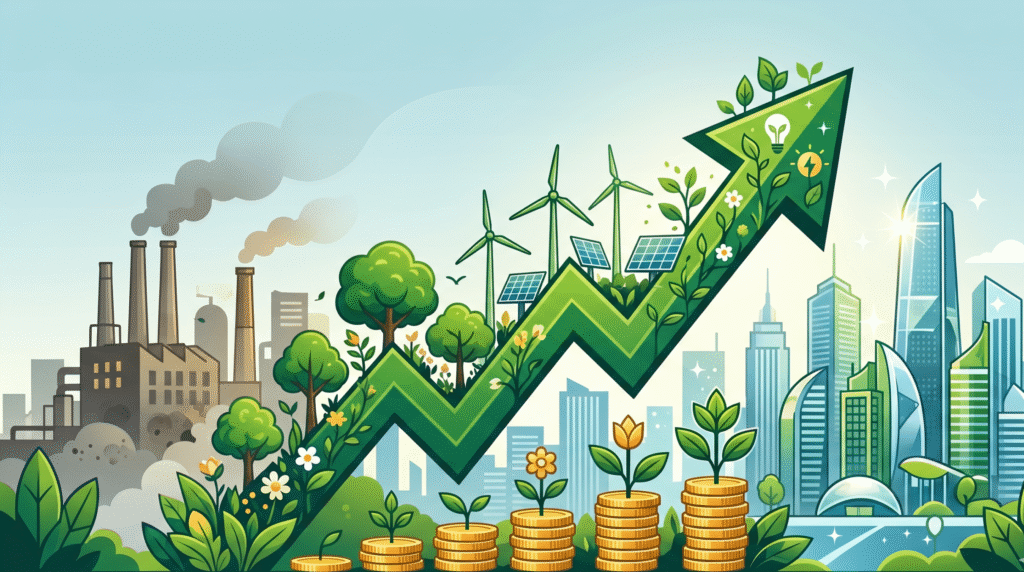
A growing school of thought suggests that economic expansion may play a stronger role in improving environmental outcomes than strict climate regulations. Recent opinion-based analysis highlights how rising prosperity can support cleaner technologies and more efficient resource use without disrupting jobs or slowing innovation.
Growth and Sustainability: A Linked Path
According to the analysis, wealthier economies tend to invest more in advanced pollution control systems and cleaner energy solutions. As income levels rise, industries often adopt efficient processes that reduce emissions per unit of output. This trend indicates that economic development can gradually align with environmental goals through market-driven improvements.
Historical data from several developed nations supports this view. Over time, increases in gross domestic product have not always resulted in proportional rises in pollution. Instead, many economies have managed to reduce emissions intensity while continuing to grow.
Role of Innovation and Market Forces
The report emphasizes the role of private sector competition in driving environmental innovation. Advances in energy systems, agricultural efficiency, and industrial processes have largely emerged from technological progress rather than centralized mandates.
For instance, transitions toward cleaner energy sources such as natural gas have often been influenced by cost efficiency and market demand. As economies expand, businesses and consumers tend to favor solutions that are both economically viable and environmentally responsible.
Rethinking Policy Approaches
The analysis suggests that policymakers should focus on enabling economic growth rather than imposing restrictive regulations. Supporters of this approach argue that excessive regulatory frameworks can slow development, particularly in emerging economies, and delay broader environmental improvements.
This perspective adds a new dimension to ongoing global discussions around climate policy, especially in the lead-up to major international forums like COP30. It challenges the idea that reducing economic activity is necessary to achieve sustainability goals and instead promotes growth-led environmental progress.
Conclusion
While the debate continues, the argument presents an alternative path to sustainability. It suggests that fostering economic expansion, combined with innovation and market efficiency, could lead to long-term environmental benefits without compromising development.
About The Author