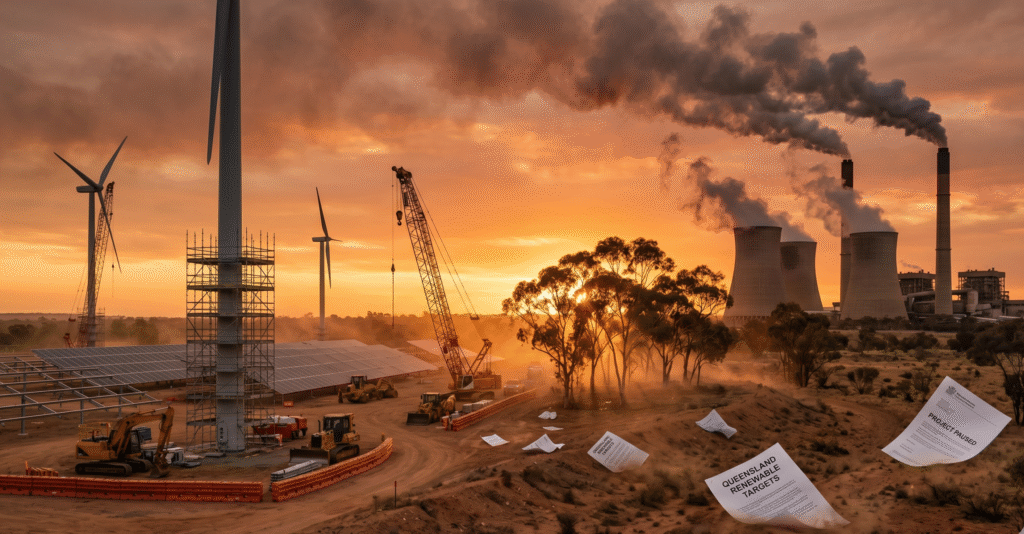
Queensland’s transition from coal to renewable energy has slowed following a recent change in political leadership. The shift in policy direction has created uncertainty in the energy sector, leading to a decline in investor confidence and a noticeable drop in clean energy investments across one of Australia’s highest-emitting regions.
Strong Momentum in 2024
In 2024, under the previous Labor government, Queensland made strong progress in expanding its renewable energy capacity. The state approved seven solar and wind projects along with seven energy storage developments, together contributing around 3,202 megawatts of capacity.
This level of generation was comparable to the output of approximately four mid-sized coal-fired power plants. At the time, the government had outlined a clear plan to phase coal out of the electricity grid by 2035, signaling a major step toward a cleaner energy future.
Policy Shift Under Liberal National Party
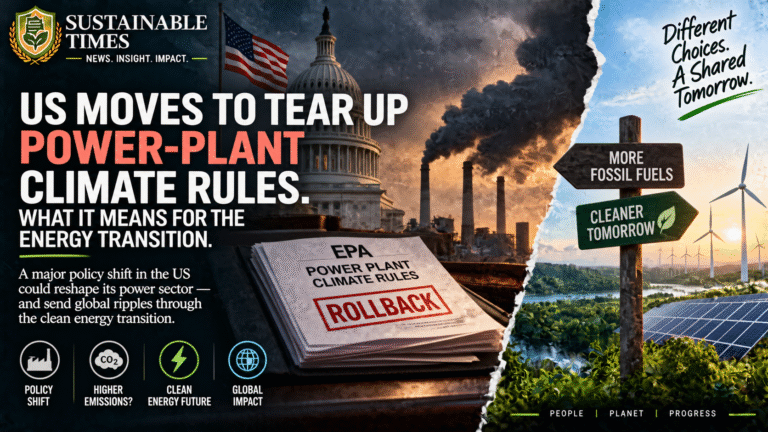
After the change in leadership, the new Liberal National Party government revised several key energy policies. Renewable energy targets were removed, and the operational timeline for state-owned coal power stations was extended until at least 2046, pushing back earlier closure plans by more than ten years.
In addition, timelines for reducing emissions in certain sectors have been delayed by up to five years. These decisions have introduced uncertainty around the state’s long-term decarbonization strategy.
Decline in Investment Activity
The impact of these policy changes became visible in 2025. Only two renewable energy projects reached financial closure during the year, adding a combined capacity of just 510 megawatts.
Industry experts note that investors are now shifting their focus toward regions with more stable and predictable policy environments. Critics warn that this could affect job creation and slow the development of skills within the renewable energy sector.
Emissions Remain a Key Challenge
Queensland continues to be a major contributor to national emissions, accounting for nearly one-third of Australia’s total carbon output. While emissions from the energy sector declined by around 34 percent between 2005 and 2023, increases in transport and mining have offset much of this progress when broader factors are considered.
There are growing calls from experts and stakeholders for consistent and balanced policy planning that supports both energy security and long-term climate goals.
About The Author