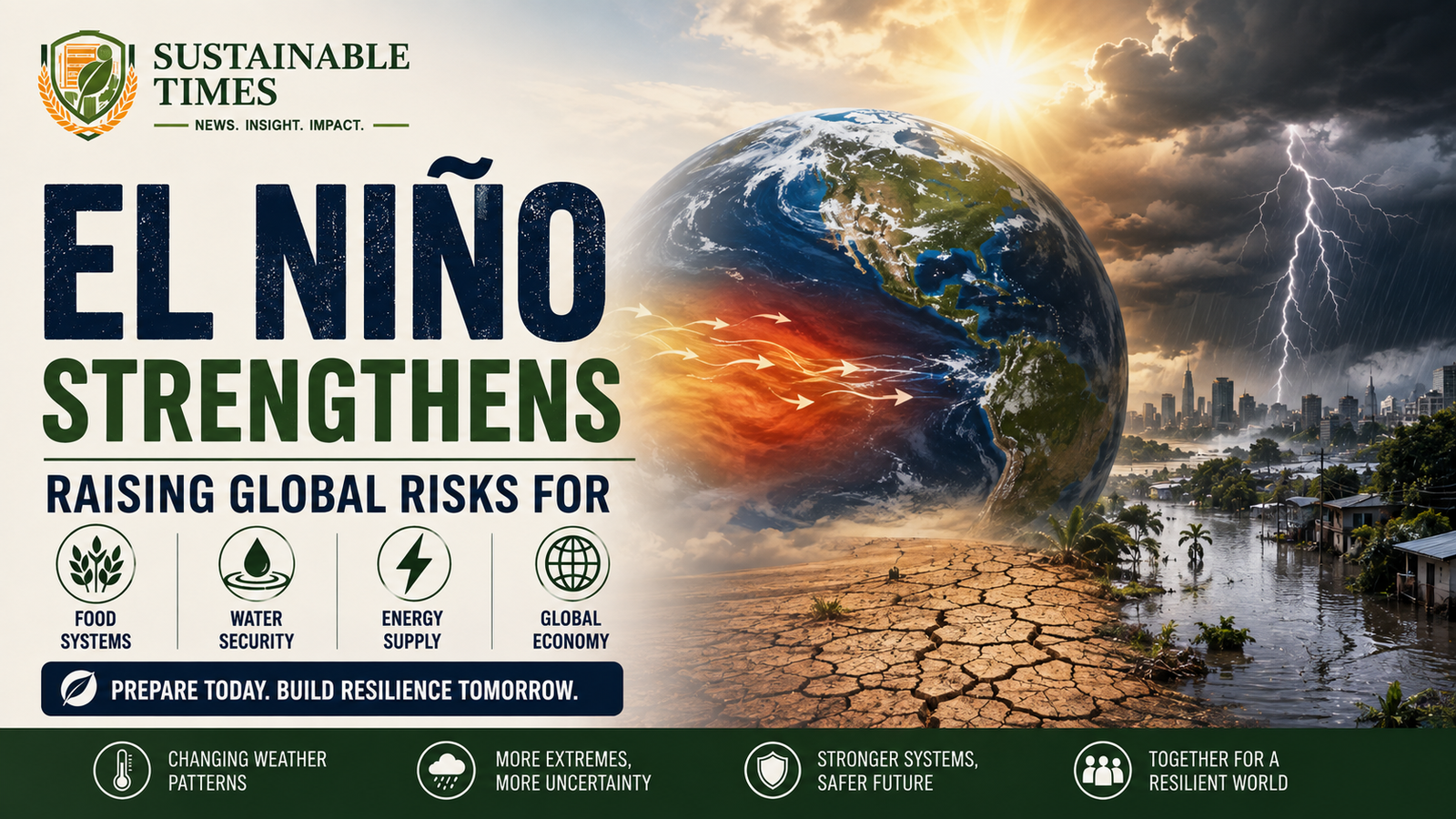
A stronger El Niño is taking shape across the tropical Pacific, and its effects are beginning to become a bigger concern for governments, businesses and climate-sensitive industries around the world.
The World Meteorological Organization says El Niño has developed and is expected to strengthen during the coming months. NOAA’s latest assessment also indicates that the event could become very strong later this year and persist into early 2027.
El Niño is a natural climate pattern, but its effects now unfold against a much warmer global climate. That combination can make preparation more complicated, particularly for regions already dealing with heat, drought, flooding or water stress.
Why El Niño Matters Beyond the Pacific
El Niño does not affect every region in the same way. Instead, it shifts atmospheric circulation and changes the likelihood of different weather patterns across the world.
Latin America is already preparing for potentially significant effects. Southern parts of the continent could see wetter conditions that support some crops, while northern and western areas could face greater heat and drought risks. These changes could also affect hydropower, river transport and agricultural supply chains.
For food-producing regions, even temporary changes in rainfall can have consequences far beyond the farm. Lower river levels can disrupt transportation, while excessive rainfall can damage crops, roads and storage infrastructure.
Water Could Become a Bigger Business Risk
Water is another area where El Niño can create uncertainty.
Regions experiencing below-average rainfall may face pressure on reservoirs, agriculture and industrial water supplies. At the same time, other areas can receive intense rainfall and face flooding.
That uneven impact makes long-term water planning increasingly important. Companies with large agricultural, manufacturing or energy operations are likely to pay closer attention to seasonal forecasts and water availability when planning production.
Recent drought conditions across Europe have already demonstrated how water stress can affect agriculture, shipping and power generation.
Energy Systems Face Their Own Challenges
Electricity systems can also feel the effects.
Drought can reduce hydropower generation in some regions, while extreme heat increases demand for cooling. Heavy rainfall and flooding can damage infrastructure and interrupt transport routes used to move fuel and equipment.
At the same time, renewable energy systems can provide part of the answer. More diversified electricity generation, stronger grids and energy storage can help reduce dependence on any single source when weather conditions change.
The International Energy Agency expects renewable electricity generation to grow by more than 8% in 2026, with renewables on track to overtake coal in global electricity generation this year.
Businesses Are Paying Attention
El Niño is no longer simply a weather story for corporate planners.
A Reuters analysis published today found that 478 companies referenced El Niño in 1,443 corporate documents between May and August 2026, the highest level of corporate attention to the phenomenon since 2019. Companies in food, chemicals and banking are among those assessing potential risks to operations and supply chains.
That response reflects a broader change in corporate sustainability. Climate risk is increasingly becoming part of business continuity planning rather than remaining solely within sustainability departments.
Companies are reviewing suppliers, inventories, water exposure, logistics routes and emergency plans before extreme weather disrupts operations.
Preparing Instead of Reacting
The most useful role of climate forecasting is not predicting exactly what will happen in every location. It is giving governments, farmers, businesses and communities enough information to prepare for a range of possible outcomes.
The WMO has emphasized the importance of climate information and early-warning systems in protecting lives and livelihoods as El Niño develops.
That preparation can include adjusting planting decisions, strengthening water management, protecting infrastructure, reviewing supply chains and improving emergency response systems.
Looking Ahead
El Niño will not determine the weather everywhere, and scientists cannot attribute every extreme event to the phenomenon. Its importance lies in how it changes the odds of certain climate conditions occurring across different parts of the world.
With the event expected to strengthen, the coming months could test how well governments and businesses have prepared for climate variability.
For the sustainability sector, the message is straightforward: resilience is becoming just as important as reduction. Cutting emissions remains essential, but societies also need stronger systems that can withstand heat, drought, floods and changing weather patterns.
Key Takeaway
The strengthening El Niño is a reminder that climate risk can move quickly through food systems, water supplies, energy markets and global supply chains. Better forecasting, stronger infrastructure and smarter resource management can help turn climate information into practical resilience.
About The Author