For decades, Brazil has supplied the world with raw materials. Its iron ore feeds steel factories overseas, its agricultural exports support global food markets, and its natural resources play an important role in international trade.
Now, researchers believe the country has an opportunity to change that relationship.
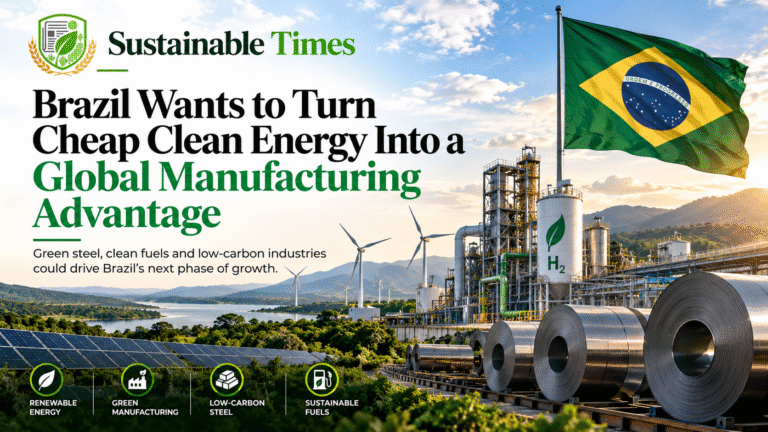
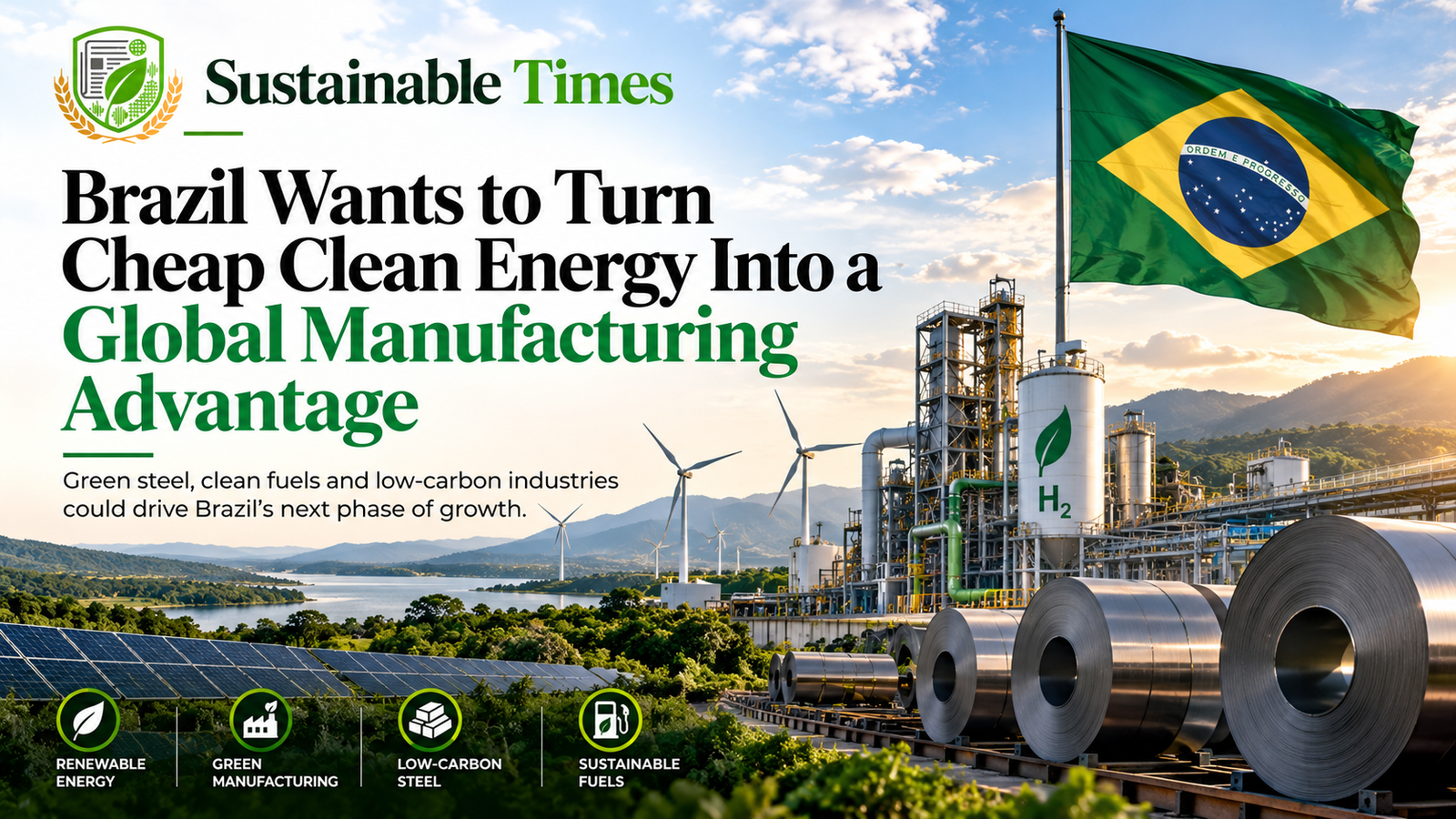
Instead of exporting raw materials and allowing other countries to capture most of the value from manufacturing, Brazil could use its abundant renewable electricity to attract industries that produce steel, sustainable fuels and other low-carbon products.
The strategy is gaining attention under a relatively unfamiliar name: powershoring.
A new Reuters analysis published on 28 October highlights research from the London School of Economics and Brazil’s Institute for Climate and Society. The researchers argue that Brazil could turn its clean-energy advantages into a source of industrial growth, higher-value exports and employment.
Their findings suggest that capturing even a modest share of global energy-transition investment could add approximately 1 to 1.5 percentage points to Brazil’s annual economic growth over the medium term.
But the opportunity depends on an important shift in thinking.
Clean electricity is no longer valuable only because it reduces emissions. It could also determine where the world’s next generation of factories gets built.
The Idea Behind Powershoring
Manufacturing has traditionally followed several major economic advantages.
Companies look for affordable labour, reliable infrastructure, raw materials and access to large consumer markets.
Energy has always been part of that calculation, but the transition toward lower-carbon production is making it increasingly important.
Steel, aluminium, chemicals and other industrial products require substantial amounts of energy.
As governments introduce stronger climate requirements and companies seek to reduce supply-chain emissions, manufacturers are looking for locations where they can obtain reliable, competitively priced clean electricity.
Powershoring builds on that opportunity.
Instead of transporting energy-intensive raw materials to distant industrial centres, companies can move selected manufacturing activities closer to regions with abundant renewable energy.
For Brazil, that could mean transforming domestically available resources into more valuable industrial products before exporting them.
The idea does not require every factory to move to Brazil.
It involves identifying the stages of production where the country’s energy and natural-resource advantages can create the greatest economic value.
Why Brazil Has an Unusual Advantage
Brazil possesses a combination of resources that few major economies can match.
Its electricity system already relies heavily on renewable sources, particularly hydropower.
The country also has extensive wind and solar resources, significant mineral reserves, agricultural production capacity and a long-established industrial base.
These advantages could become increasingly valuable as industries attempt to reduce their dependence on fossil fuels.
Take steel production.
Conventional steelmaking often depends on coal-based processes that generate substantial greenhouse-gas emissions.
Alternative technologies can use hydrogen produced with low-carbon electricity to reduce iron ore.
Brazil has both substantial iron ore resources and the potential to produce renewable hydrogen.
That combination creates an opportunity to manufacture lower-emission iron and steel products closer to the source of the raw materials.
Researchers estimate that Brazilian green steel could eventually cost approximately $150 to $350 less per metric tonne than comparable production in Europe, depending on the manufacturing process and market conditions.
That price advantage could help attract industrial investment while supporting global efforts to decarbonise one of the world’s most emissions-intensive sectors.
Green Steel Could Become a Major Export Opportunity
Steel is essential to modern infrastructure.
Buildings, vehicles, railways, wind turbines and industrial machinery all depend on it.
Yet the industry also accounts for a substantial share of global greenhouse-gas emissions.
Reducing those emissions will require cleaner production technologies, new energy systems and significant investment.
Brazil’s traditional role in this industry has centred heavily on supplying iron ore.
Powershoring could allow the country to move further along the value chain.
Instead of exporting only raw ore, Brazil could produce low-emission iron or finished steel for international customers.
A recent analysis by Agora Industry also identifies Brazil as a potential beneficiary of emerging green-iron trade.
The research suggests that international trade in hydrogen-based iron could create additional economic activity in countries with abundant renewable energy.
For Brazil, the opportunity could reach tens of billions of dollars in additional economic output by 2050 under favourable scenarios.
However, these projections depend on future investment, technology costs, electricity infrastructure and demand for low-carbon materials.
The market is promising, but it is not guaranteed.
Sustainable Fuels Offer Another Path
Steel is not the only industry that could benefit.
Brazil has decades of experience producing biofuels, particularly ethanol.
It also has significant agricultural resources and the potential to expand production of sustainable fuels for industries that remain difficult to electrify.
Aviation provides one example.
Aircraft require energy-dense fuels, especially for long-distance travel.
Sustainable aviation fuel could help reduce lifecycle emissions compared with conventional jet fuel when producers use suitable feedstocks and responsible production methods.
Brazil’s agricultural capabilities and industrial experience may provide advantages in developing some of these fuels.
However, sustainability will depend on how producers manage land, water, agricultural inputs and supply-chain emissions.
Expanding biofuel production cannot automatically be described as environmentally beneficial.
If new production causes deforestation or competes unsustainably with food systems, it could undermine the intended climate benefits.
That makes environmental safeguards essential to Brazil’s industrial strategy.
The Real Challenge Is Turning Resources Into Industry
Natural advantages do not automatically create competitive industries.
Brazil has substantial renewable-energy potential, but attracting international manufacturers requires more than inexpensive electricity.
Investors also need reliable transportation networks, modern ports, predictable regulations and access to long-term financing.
Energy-intensive factories require stable power supplies and infrastructure capable of operating for decades.
Brazil continues to face challenges involving high financing costs, logistical bottlenecks and regulatory uncertainty.
These issues can make large industrial projects more expensive or discourage investors from committing capital.
The researchers therefore argue that government policy should focus on reducing investment risks rather than attempting to finance every project directly.
That could involve targeted guarantees, infrastructure development and financial arrangements that help private investors support commercially viable projects.
The objective is to turn Brazil’s energy advantages into industrial capacity that can operate competitively over the long term.
Brazil Is Already Experimenting With Green Finance
Brazil has begun introducing financial mechanisms designed to attract investment into its ecological transition.
One example is EcoInvest Brasil, a federal programme intended to mobilise private capital for sustainable investment.
According to recent reporting, the programme has helped mobilise more than 140 billion Brazilian reais.
Researchers see such mechanisms as potentially useful tools for addressing financing barriers.
Another example comes from Espírito Santo, where public revenues associated with the oil industry have helped support a decarbonisation investment initiative involving private-sector participation.
These approaches illustrate an important financial principle.
Public money does not necessarily have to cover the full cost of green industrial development.
Instead, governments can use selected financial tools to reduce risks and encourage larger private investments.
The effectiveness of those programmes will depend on whether the resulting projects deliver measurable economic and environmental benefits.
The Global South Could Gain a Different Role in Manufacturing
Brazil’s strategy has implications beyond Latin America.
For decades, many developing economies have depended heavily on exporting raw materials while importing higher-value manufactured products.
The clean-energy transition could create an opportunity to change that pattern.
Countries with abundant renewable electricity, minerals and industrial resources may become attractive locations for selected stages of low-carbon manufacturing.
Australia, South Africa and several other resource-rich economies are exploring related opportunities.
But moving manufacturing into emerging markets does not automatically guarantee environmental or social progress.
Governments still need strong labour protections, responsible resource management and safeguards against pollution and land degradation.
The economic benefits also need to reach local communities rather than remain concentrated among a small number of companies.
A successful green industrial strategy should create lasting domestic capabilities, including skilled employment, research partnerships and stronger local supply chains.
Otherwise, countries risk replacing one form of resource dependence with another.
India Has a Reason to Watch Brazil’s Strategy
India is also working to expand renewable electricity while developing domestic manufacturing in sectors such as solar equipment, batteries, green hydrogen and low-carbon industrial materials.
Brazil’s powershoring strategy offers a useful comparison.
Both countries want to strengthen industrial competitiveness while responding to the global energy transition.
However, their economic structures and resource advantages differ.
Brazil can build on extensive renewable resources and its position as a major exporter of iron ore and agricultural commodities.
India brings a large domestic market, an established manufacturing base and growing demand for industrial materials.
The wider lesson is that countries may increasingly compete not only through labour costs or access to raw materials, but through the reliability and carbon intensity of their energy systems.
For industrial investors, the source of electricity could become a more important factor in deciding where production takes place.
The Green Transition Is Becoming an Industrial Competition
Much of the global sustainability conversation has focused on how quickly countries can replace fossil-fuel electricity with renewable generation.
That remains essential.
But Brazil’s emerging strategy shows that renewable electricity could create economic opportunities beyond the power sector.
Clean energy can support lower-emission manufacturing, attract international investment and influence future trade patterns.
The real challenge is capturing that value.
Brazil already possesses many of the resources needed to participate in the next phase of global industrial development.
What remains uncertain is whether the country can turn those advantages into competitive factories, skilled employment and durable economic growth.
That will require coordinated investment, better infrastructure and policies that give businesses confidence to develop projects over the long term.
If Brazil succeeds, it could demonstrate a new development pathway for resource-rich economies.
Instead of remaining suppliers of raw materials, they could become producers of the low-carbon goods the world increasingly needs.
The next clean-energy race may not be about which country installs the most solar panels or wind turbines. It may be about which country can turn that electricity into the industries of the future.
About The Author