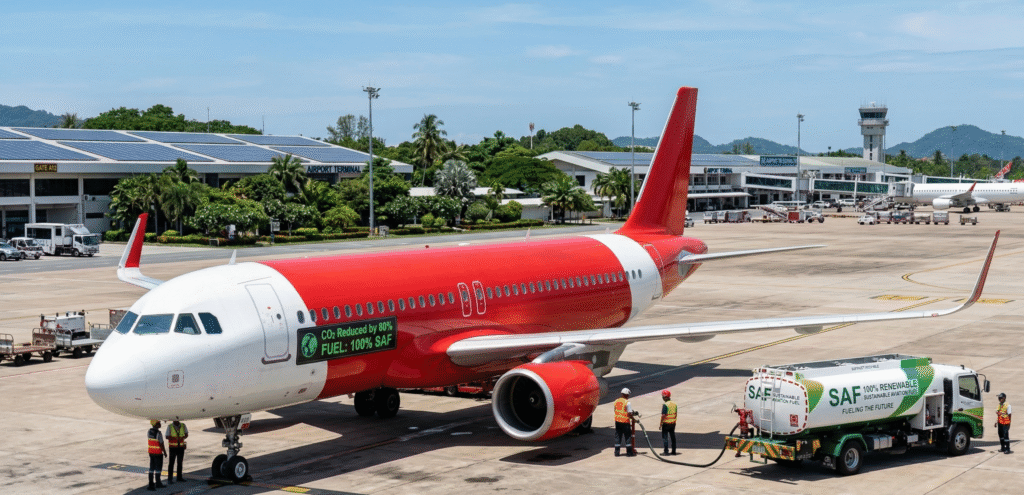
AirAsia has been recognized as one of the world’s leading airlines for sustainability, according to a recent Malaysian business report. The low cost carrier continues to strengthen its environmental commitments while improving efficiency across its operations. The latest recognition highlights the airline’s ongoing efforts to reduce emissions and adopt greener aviation practices.
AirAsia Achieves High ESG Ranking
AirAsia has secured a place among the top five airlines globally in the latest FTSE Russell ESG ratings benchmark. The ranking reflects the airline’s strong performance in environmental, social, and governance standards.
This achievement follows another milestone earlier in 2025 when AirAsia received a perfect 10 out of 10 score in an environmental audit conducted by 42kft.com. The assessment reviewed 142 airlines worldwide and evaluated factors such as fleet modernization, operational efficiency, and emission reduction strategies.
Industry analysts noted that AirAsia stood out because of its measurable actions and implemented programs rather than long term promises alone.
Operational Changes Help Reduce Emissions
AirAsia has introduced more than 20 operational efficiency initiatives aimed at lowering its carbon footprint. These efforts have helped the airline reduce carbon intensity per seat to some of the lowest levels in its segment.
Several initiatives have played a key role in this progress. The airline deployed ground power units at airports to reduce engine idling during aircraft turnaround. This step helps lower fuel consumption and limits unnecessary emissions while planes remain on the ground.
AirAsia has also removed many single use plastic items from its flights and replaced them with biodegradable alternatives. The move forms part of a broader sustainability strategy focused on reducing onboard waste.
Partnerships Support Future Sustainable Aviation
The airline is also investing in long term aviation innovation through strategic partnerships. AirAsia is working with Airbus on the development and adoption of sustainable aviation fuel solutions. These fuels are designed to significantly reduce lifecycle carbon emissions compared to conventional jet fuel.
In addition, the airline is collaborating with Heart Aerospace to explore hybrid electric aircraft technology. Such aircraft could play a significant role in reducing emissions on regional routes in the coming years.
These partnerships aim to accelerate the transition toward cleaner aviation technologies.
Digital Tools Encourage Greener Travel Choices
AirAsia has also introduced new tools to improve transparency for passengers. The airline integrated a carbon emissions feature into its MOVE mobile application. The tool displays real time emissions data for each flight, allowing travelers to better understand the environmental impact of their journeys.
This initiative encourages passengers to make more informed travel decisions while supporting the airline’s sustainability goals.
Active Role in Global Aviation Climate Policies
Beyond internal operations, AirAsia also contributes to broader climate initiatives within the aviation sector. The airline currently chairs national task forces focused on carbon offset programs such as CORSIA, a global scheme designed to stabilize emissions from international aviation.
AirAsia also provides guidance to international aviation bodies on policy discussions related to sustainability and emissions reduction. These efforts help align the airline’s strategy with global climate objectives.
With continued investments in cleaner technologies, operational efficiency, and passenger transparency, AirAsia is positioning itself as a key player in the aviation industry’s transition toward more sustainable travel.
About The Author