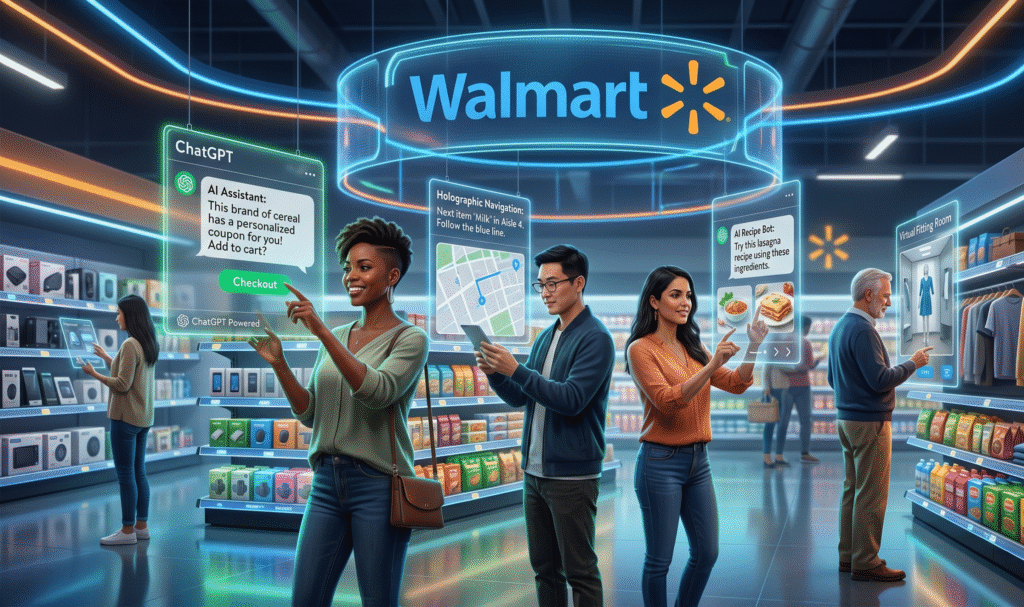
Walmart has entered into a strategic partnership with OpenAI to bring direct shopping capabilities into ChatGPT. The collaboration introduces an Instant Checkout feature, allowing users and Sam’s Club members to browse and purchase products without leaving the chat interface.
This move is part of a broader effort to simplify online shopping and reduce friction in the buying process. By embedding retail functionality within conversational AI, Walmart aims to make product discovery and transactions more intuitive for users.
Expansion of AI-Driven Retail Partnerships
The partnership builds on OpenAI’s growing network in the e-commerce space, including collaborations with platforms such as Etsy and Shopify. These developments signal a shift toward AI-powered retail ecosystems where consumers can complete purchases directly through chat-based interactions.
Industry analysts believe this trend could redefine how users engage with online marketplaces, especially as conversational interfaces become more advanced and widely adopted.
Investor Response and Market Movement
Following the announcement, Walmart’s stock saw a notable rise. Shares increased by 5 percent, closing at $107.21, reflecting positive investor sentiment around the company’s digital strategy.
In addition, referral traffic from ChatGPT to Walmart’s website has shown steady growth. It rose from 9.5 percent in August to 15 percent in September. Despite this increase, overall traffic contribution from the platform remains below 1 percent, indicating significant room for expansion.
The Bigger Picture for E-Commerce
The collaboration highlights the growing influence of artificial intelligence in reshaping the retail landscape. Chat-based shopping experiences are becoming more common as consumers look for faster and more convenient ways to make purchases.
This shift also aligns with broader trends across business and sustainability sectors, where technology is being used to improve efficiency in supply chains and enhance customer access to products. As AI adoption continues to grow, such integrations could play a key role in defining the future of digital commerce.
About The Author