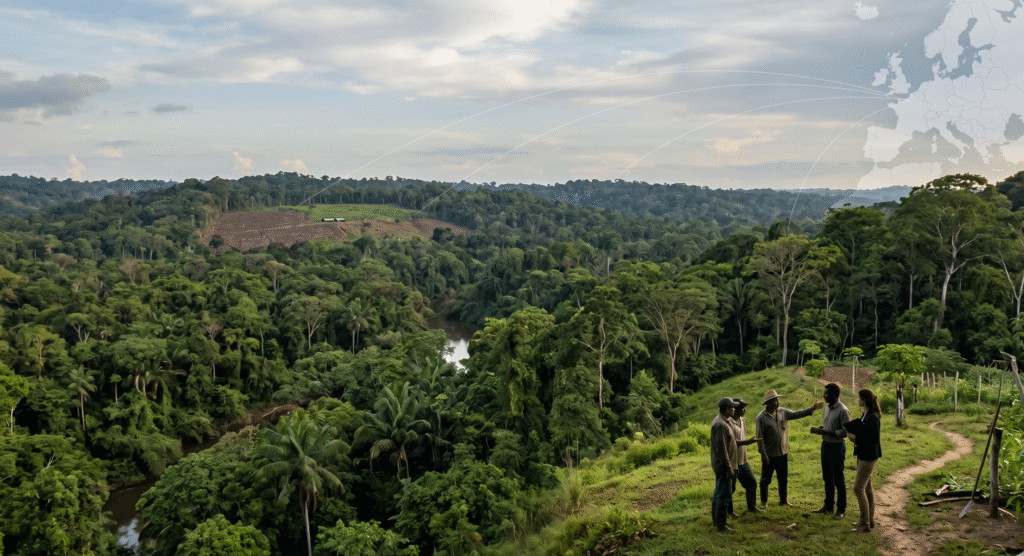
Brussels, April 16, 2026 The European Union’s landmark deforestation regulation is already starting to influence global supply chains, with early data indicating a slowdown in forest loss across key commodity-producing regions. However, growing political discussions around delaying or weakening the policy have raised concerns among environmental groups.
Advocates argue that the regulation remains one of the EU’s most effective tools to address climate change and biodiversity loss. They are urging policymakers to maintain its strength and avoid changes that could reduce its impact.
Understanding the regulation
The EU Deforestation Regulation, commonly known as EUDR, requires companies to ensure that certain products entering the EU market are not linked to deforestation. These include widely traded commodities such as cocoa, coffee, soy, palm oil, beef, and timber.
To comply, businesses must carefully track their supply chains, identify the origin of raw materials, and confirm that production did not involve recent forest clearing or ecosystem degradation. This has pushed companies to adopt stricter due diligence systems and invest in advanced monitoring tools like satellite tracking and land mapping technologies.
Producers in tropical regions have also reported stricter purchasing requirements, with buyers increasingly demanding proof of sustainable sourcing as a condition for accessing European markets.
Early signs of change
Initial assessments from forest monitoring groups suggest that the regulation is already influencing behavior. Some high-risk regions linked to commodities such as soy, palm oil, and cattle production have shown a decline in deforestation linked to exports heading to Europe.
Experts caution that these improvements cannot be attributed to the EU law alone. National regulations, corporate commitments, and conservation efforts are also contributing factors. Still, many researchers agree that the EU’s policy adds strong market pressure that reinforces existing sustainability initiatives.
Debate over delays and changes
Despite early progress, the regulation has faced resistance from some governments and industry groups. Concerns have been raised about compliance costs, especially for small-scale producers, and the potential impact on global trade.
In response, the European Commission has proposed extending the timeline for certain requirements, potentially shifting full implementation to late 2026. Discussions are also ongoing around simplifying reporting obligations and categorizing countries based on perceived risk levels.
Environmental organizations warn that such changes could weaken the regulation’s effectiveness. They argue that delays and exemptions may reduce accountability and undermine trust among countries working to align with EU standards.
The road ahead
Experts emphasize that successful implementation will require strong support systems, including digital verification tools and financial assistance for smallholder farmers. They also recommend maintaining consistent rules across all trading partners to ensure fairness and transparency.
As the implementation deadline approaches, the debate is expected to intensify. While some stakeholders view the regulation as essential for sustainable trade, others see it as a challenge to economic partnerships, particularly with regions in Africa and Latin America.
For now, environmental advocates remain firm in their stance. They believe that consistent enforcement, rather than policy dilution, is key to ensuring that global supply chains move away from practices that drive forest destruction.
About The Author