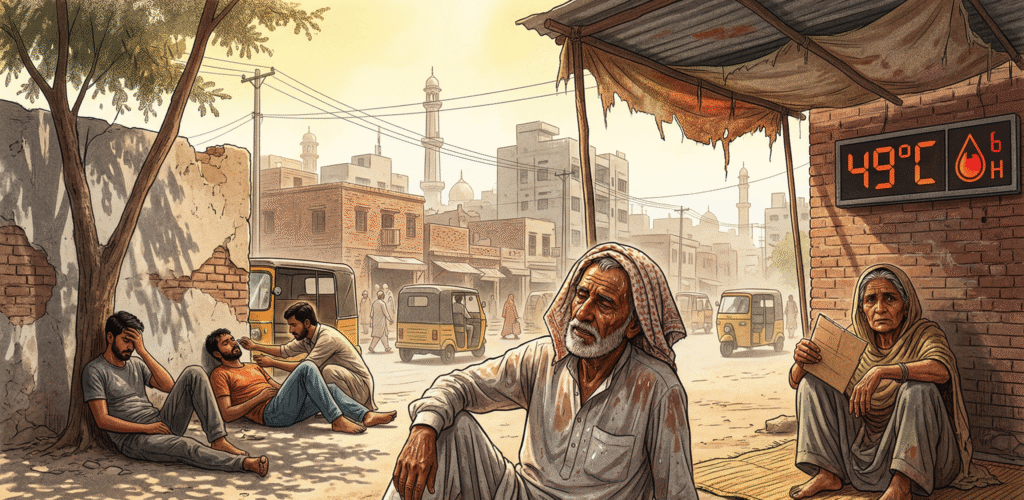
Recent research shows that extreme heatwaves are already creating conditions that can threaten human survival. Older adults face the highest risk. These dangers appear even before temperatures reach the previously accepted wet-bulb limit of 35 degrees Celsius.
Study Highlights Growing Health Risks
Scientists studied six major heatwave events between 2003 and 2024. They used a new model called HEAT-Lim. This model considers age, sunlight exposure, and how the human body cools itself.
The results show serious risks. All six events created conditions that could prove fatal for people above 65 years old. These risks appeared when people stayed outdoors without shade. In some cases, even shaded areas did not provide enough safety. Younger adults also faced danger during extreme conditions.
The study covered several regions. These include Mecca and Bangkok in 2024, Phoenix in 2023, and Jacobabad in Pakistan in 2015. Researchers also reviewed earlier heatwaves in Australia and Seville, Spain. These events caused thousands of deaths. However, the new model shows that the actual risk was likely much higher.
Rising Global Temperatures Increase the Threat
Researchers warn that current global warming levels already put millions of people at risk. The impact remains severe in densely populated and developing regions. Many heat-related deaths in these areas often go unreported.
The study also highlights future concerns. If global temperatures rise by 3 degrees Celsius, the situation could worsen. By the end of the century, around 1.2 billion people may face similar extreme heat risks.
Experts Urge Immediate Action
Experts say the threat is no longer in the future. It is already happening today. According to Sarah Perkins-Kirkpatrick, dangerous heat conditions are becoming more common.
They recommend urgent action. Governments should improve heat safety plans. Authorities should expand access to cooling systems. Public awareness also needs to increase. These steps can help protect vulnerable groups such as older adults, children, and low-income communities.
About The Author