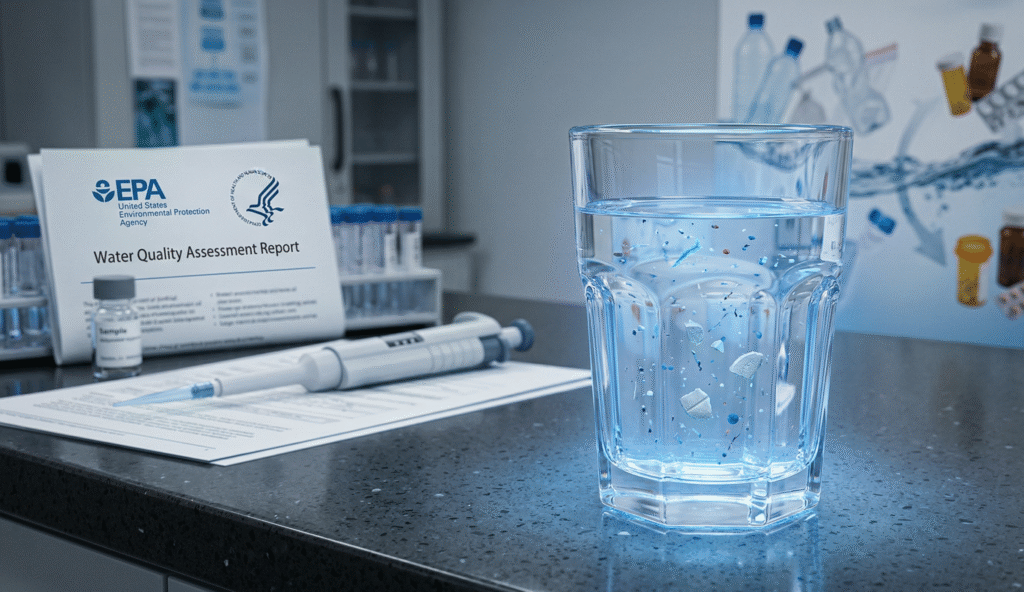
US federal agencies have started tracking microplastics and pharmaceutical residues in drinking water systems. This step comes as public concern grows over the health risks linked to these contaminants. It may also lead to stricter safety regulations in the future.
New Monitoring Plan Announced
The Environmental Protection Agency and the Department of Health and Human Services have added microplastics and pharmaceuticals to the sixth Contaminant Candidate List, also known as CCL 6.
This list highlights substances that need closer monitoring in public water systems. Agencies will fund new research to study their health effects. The results will help officials decide if limits are required under the Safe Drinking Water Act.
Officials Stress Urgency
Lee Zeldin said the move responds to public demand for safer drinking water. Robert F. Kennedy Jr. called it an important step in addressing microplastics as a health concern.
He also linked the initiative to the Make America Healthy Again campaign. The draft CCL 6 includes PFAS chemicals, disinfection byproducts, and certain microbes.
Sources of Contamination
Microplastics enter water when plastic waste breaks down in the environment. Pharmaceuticals reach water systems through human waste and improper disposal.
The EPA plans to monitor 374 pharmaceutical compounds. It will also set health benchmarks for these substances. This marks the first time both categories have been prioritized on the list, which updates every five years.
Future Outlook
This effort will provide key data for future policy decisions. While regulators have not announced limits yet, the move shows a stronger focus on emerging water contaminants and public health risks.
About The Author