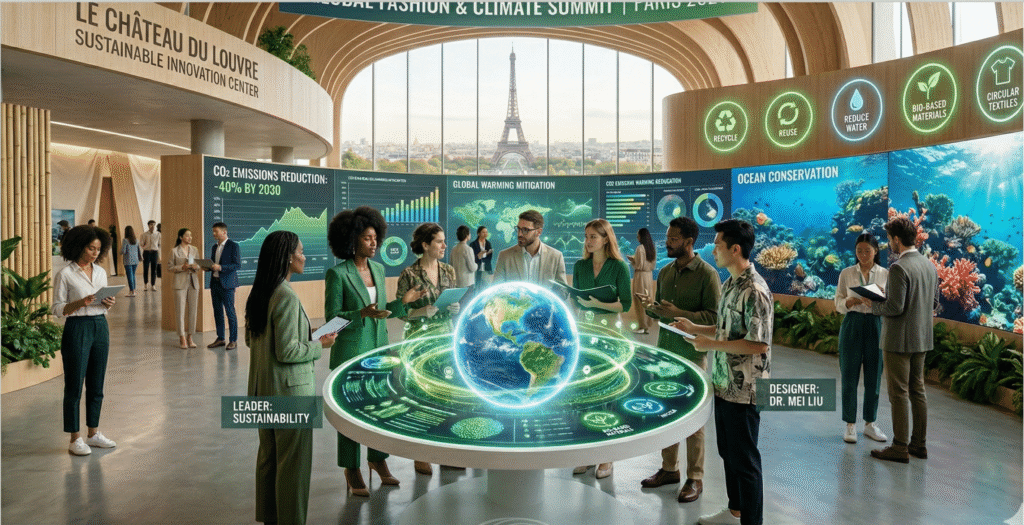
The global fashion industry is reassessing its role in climate action following key discussions at ChangeNOW Summit held in Paris this week. Hosted at the iconic Grand Palais, the three day event brought together innovators, investors, and sustainability advocates to explore how fashion can accelerate its environmental commitments.
The summit highlighted a clear message: while solutions to reduce fashion’s environmental impact already exist, the industry must now focus on scaling them through stronger collaboration, investment, and long term planning.
Industry Moves from Awareness to Action
The event showcased a wide range of climate conscious innovations, including circular materials, low impact textiles, and advanced supply chain solutions. These developments signal a shift in the industry’s position, from being a contributor to environmental challenges to becoming a potential driver of meaningful change.
Interactive exhibits and immersive installations also played a significant role. Themes such as ocean conservation were presented through visual storytelling, reinforcing that emotional engagement can be just as powerful as data in influencing sustainable behaviour.
Reduced Corporate Presence Signals Changing Priorities
Compared to previous editions, major fashion corporations maintained a lower profile at this year’s summit. According to Nina Marenzi, this reflects broader economic and political uncertainties affecting long term sustainability commitments across regions.
Despite this shift, some companies stood out for their focused approach. Kering presented initiatives linking climate goals with material innovation and improved supply chain transparency. Meanwhile, L’Oréal demonstrated its commitment through investor oriented solutions, including circular packaging concepts and water saving technologies, supported by its sustainability investment programs.
Key Takeaways for the Fashion Sector
Solutions Are Already Available
One of the strongest takeaways from the summit is that the industry no longer needs to wait for innovation. Technologies such as next generation fibres made from agricultural waste and digital tools for tracking environmental impact are already in use. The challenge now lies in adopting and scaling these solutions effectively.
Finance and Fashion Must Align
The event underscored the importance of stronger partnerships between financial institutions and fashion brands. Investors are ready to support sustainable ventures, but they require transparent data, clear metrics, and long term environmental strategies. Brands that prioritise accountability and reporting will likely gain better access to funding.
Storytelling Drives Sustainable Change
Another important insight was the growing role of storytelling in sustainability. Experts at the summit emphasised that communicating climate action through relatable narratives, art, and experiences can influence consumer behaviour more effectively than technical data alone. For brands, integrating sustainability into their core identity will be essential.
Outlook for the Fashion Industry
The discussions at the ChangeNOW Summit suggest a cautiously optimistic future for fashion. While the industry has access to the tools and knowledge needed for transformation, success will depend on its willingness to implement change at scale.
As regulatory pressures increase and market expectations evolve, brands that focus on transparency, collaboration, and innovation are expected to lead the next phase of sustainable fashion.
About The Author