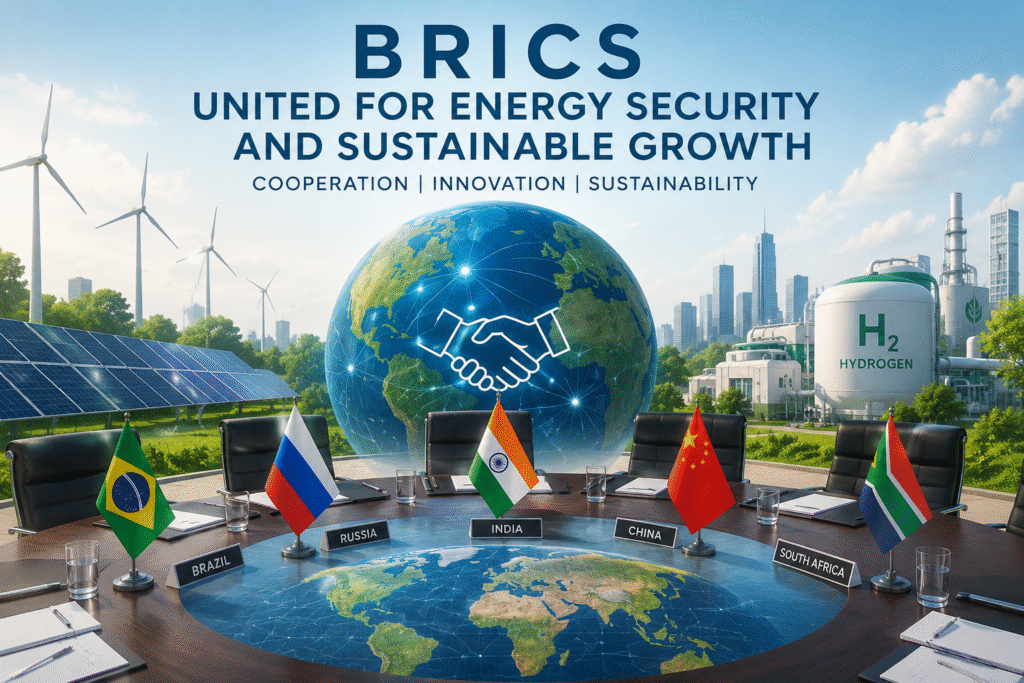
BRICS member nations have taken a step forward in strengthening cooperation on energy security and sustainability, agreeing on a shared approach aimed at improving long term energy stability and future focused development strategies.
The latest understanding among the member countries reflects a growing commitment to work more closely in key areas such as reliable energy access, sustainable development models, technological innovation, infrastructure strength, and knowledge sharing. This shift highlights the increasing need for coordinated global action as energy challenges become more complex.
With energy demand rising steadily across both developed and developing economies, BRICS countries are placing greater importance on balancing economic growth with environmental responsibility. The focus is now shifting toward building flexible and dependable energy systems that can support long term development while adapting to global changes.
Officials and representatives involved in the discussions also emphasized the role of technology driven solutions and stronger institutional partnerships. Member nations showed interest in promoting innovation, improving technical capabilities, and supporting initiatives that can strengthen energy systems across different regions.
Another key point of discussion was infrastructure resilience. Countries stressed the need to develop systems that can withstand economic uncertainty, environmental pressures, and disruptions in global supply chains. Alongside this, capacity building and knowledge exchange were identified as essential tools for ensuring more inclusive and sustainable progress.
The consensus suggests that BRICS is looking to expand its cooperation beyond traditional economic matters and move more actively into areas linked to energy transition and long term sustainability planning.
Analysts believe this development reflects a broader effort by emerging economies to build shared strategies for global energy security while still preserving national policy flexibility.
About The Author