A major new sustainability-finance programme in East Africa is putting a simple question in the spotlight: can financial markets channel enough long-term capital into projects that communities and the environment actually need?
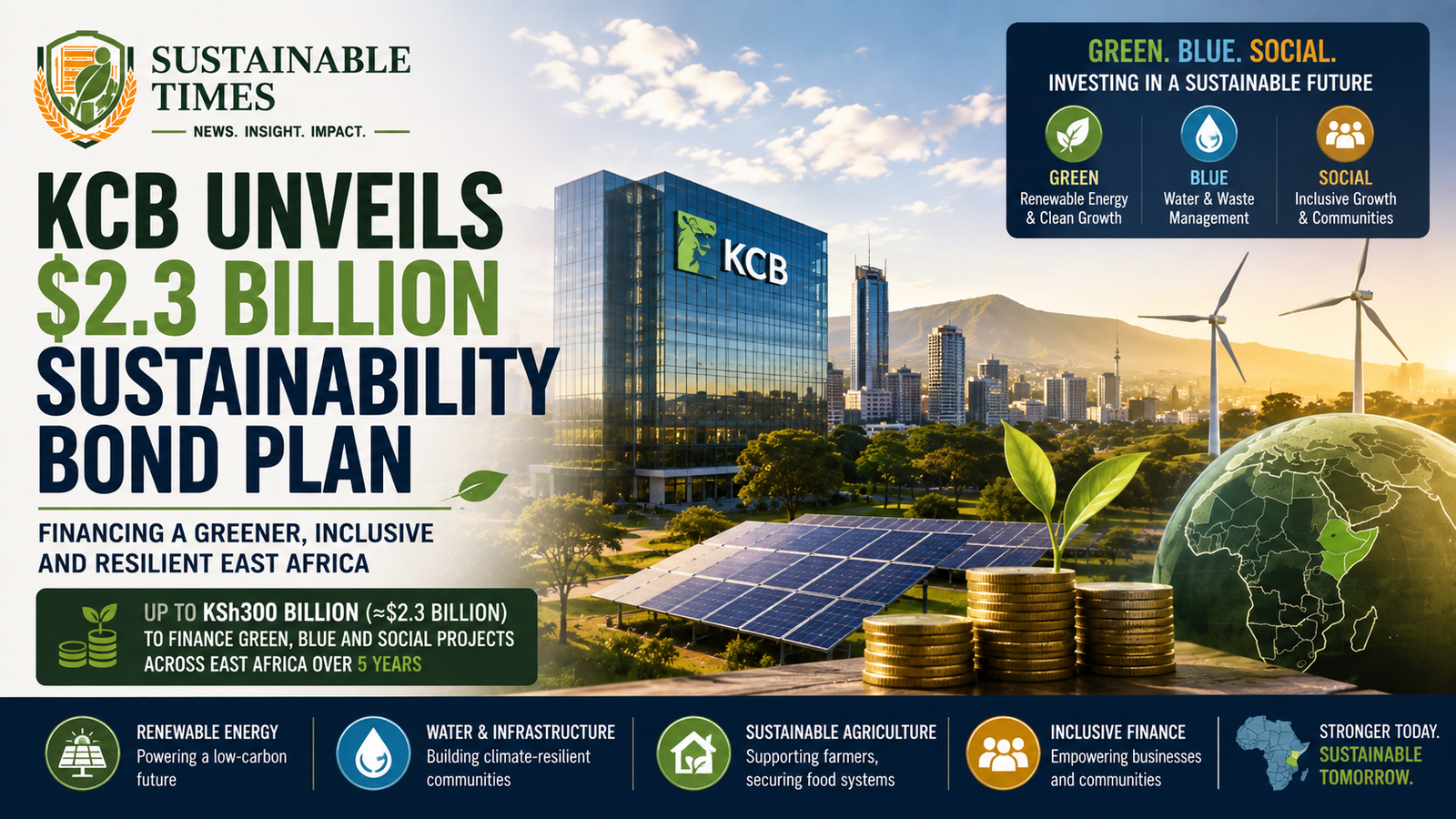
Kenya-based KCB Group has unveiled a Sustainability Bond Framework that could support up to KSh300 billion (about US$2.3 billion) in financing over five years. The programme is designed to raise capital for green, blue and social projects, with the first tranche expected to target as much as KSh100 billion, subject to regulatory approvals and market conditions.
The announcement gives sustainable finance a significant new story in Africa, where access to affordable long-term capital remains a major challenge for climate and development projects.
What Will the Money Finance?
KCB’s framework is designed to direct funding toward projects with environmental and social benefits.
Potential areas include renewable energy, climate-resilient infrastructure, water and wastewater management, sustainable agriculture, affordable housing and financing for underserved businesses.
That range is important. Sustainable finance is increasingly moving beyond financing solar farms or wind projects alone. Banks and investors are beginning to look at resilience, water security, livelihoods and access to finance as connected parts of the sustainability transition.
Why Africa Needs More Sustainable Finance
Africa faces a difficult financing gap.
Many countries are highly exposed to climate-related risks but struggle to attract enough long-term capital for adaptation and low-carbon development. The challenge is often not simply finding investors—it is developing projects with strong enough structures, predictable returns and credible environmental or social outcomes to attract that investment.
KCB’s new programme therefore comes at an interesting time.
The bank already has experience in sustainable lending. Its 2025 sustainability reporting shows that it has been expanding green finance and integrating environmental and social considerations into lending decisions.
The Green Climate Fund has also approved a climate-finance project involving KCB Bank Kenya to expand financing for climate-smart solutions among vulnerable small businesses and farmers.
The Bigger Shift in Sustainable Finance
The significance of the announcement goes beyond one bank.
For years, discussions around climate finance have focused heavily on how much money is available. Increasingly, the conversation is shifting toward how that money reaches projects on the ground.
A successful sustainability bond programme needs more than a large headline figure. Investors need transparency about where the money goes, how projects qualify, how environmental and social outcomes are measured and how the issuer reports progress.
That makes the quality of the framework just as important as the size of the programme.
Green, Blue and Social Finance Come Together
KCB’s approach also reflects another development in sustainable finance: environmental and social objectives are becoming increasingly connected.
A water project can improve climate resilience while supporting communities. Renewable energy can reduce emissions while lowering energy costs for businesses. Climate-smart agricultural finance can protect livelihoods while helping farmers adapt to changing weather conditions.
This interconnected approach could become particularly important in emerging markets, where environmental challenges often directly affect employment, food security and household incomes.
What Comes Next?
The first KSh100 billion tranche will be closely watched if it proceeds as planned.
The key test will not simply be whether KCB can raise the money. It will be whether the capital reaches projects that can demonstrate real environmental and social impact.
That means strong project selection, transparent reporting and credible impact measurement will matter as much as investor demand.
If the programme succeeds, it could provide a useful model for how financial institutions in emerging markets can mobilize private capital for sustainability priorities.
Looking Ahead
The global sustainability transition needs enormous amounts of investment, but the opportunities are not limited to wealthy economies.
Africa needs capital for clean energy, resilient infrastructure, water systems, sustainable agriculture and inclusive businesses—and it needs financial mechanisms capable of connecting those needs with investors.
KCB’s proposed programme shows how banks can become an important bridge between sustainable development goals and private capital.
The real measure of success will come later: when the money raised can be traced to projects that make communities more resilient, businesses more sustainable and economies better prepared for a changing climate.
Key Takeaway
KCB’s proposed KSh300 billion sustainability bond programme highlights the growing role of sustainable finance in Africa. The bigger opportunity is not simply raising billions for ESG-labelled projects, but turning financial capital into measurable environmental resilience and social impact.
About The Author