Plastic pollution often becomes an ocean problem long before anyone sees it on a beach.
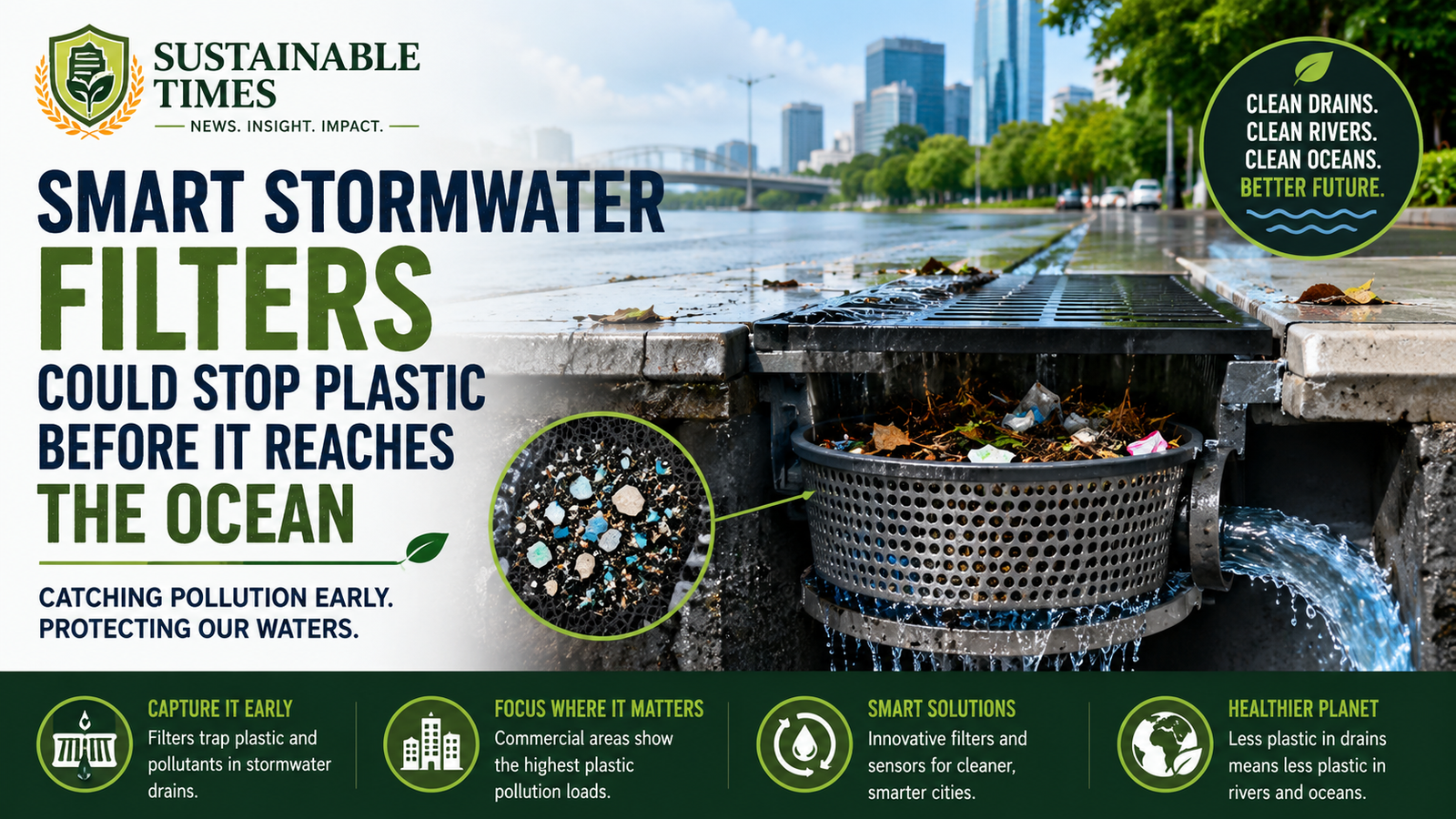
A new study from researchers at the University of New South Wales (UNSW) has highlighted a practical way cities can intercept that pollution much earlier: install filtration systems directly inside stormwater drains.
Researchers working with the Australian Government’s Sustainable Communities and Waste Hub sampled stormwater filtration devices across Sydney and found clear differences in plastic pollution between commercial, industrial and residential areas. The research suggests that commercial locations could offer some of the biggest opportunities for targeted intervention.
The idea is straightforward: capture plastic where it enters the drainage system instead of trying to remove it after it reaches rivers, estuaries or the ocean.
Rain Can Carry More Than Water
When heavy rain moves across roads, car parks, loading areas and other hard surfaces, it can pick up packaging, fragments, fibres and other pollutants.
That material can then enter stormwater drains and move through urban waterways.
Unlike wastewater, stormwater in many cities does not pass through a centralized treatment process before reaching natural waterways. This makes drainage infrastructure an important but often overlooked part of the fight against plastic pollution.
The UNSW team examined filtration devices installed at different types of urban sites and analysed plastics ranging from visible pieces larger than 5 millimetres to particles smaller than 500 micrometres.
Commercial Areas Emerged as Key Hotspots
The research found that commercial catchments recorded the highest plastic and microplastic loads.
Busy loading docks, car parks and other commercial areas generated substantial plastic pollution, while industrial locations contributed larger plastic pieces that can fragment over time.
Residential areas showed a different pattern. They contained less total plastic but a greater share of fine particles, which can move more easily through water systems.
That distinction matters because it suggests cities do not need to treat every drainage location identically.
They can use pollution data to identify high-impact locations and concentrate filtration and maintenance resources where they are likely to achieve the greatest benefit.
Catch It Before It Travels
The approach reflects an important shift in environmental management: prevention at the source can be more effective than cleanup downstream.
Researchers found that the filtration systems captured substantial quantities of plastic debris and microplastics before they entered the wider drainage network.
Australia has already identified stormwater as an important pathway for plastic pollution. The federal government’s National Plastics Plan includes work with states, territories and CSIRO to develop solutions that prevent plastic debris from entering the marine environment through stormwater.
The latest research adds a practical dimension to that goal: identify the hotspots, install the right infrastructure and maintain it consistently.
Technology Is Getting Smarter
Filtration is not the only innovation emerging around stormwater.
UNSW engineers are also developing smart stormwater systems that combine sensors and real-time weather forecasts to improve the way urban runoff is managed. The aim is to help systems respond more intelligently to changing rainfall and pollution conditions.
That points toward a broader future for urban water management.
Instead of treating drains as passive infrastructure, cities could increasingly use them as active environmental protection systems—monitoring pollution, capturing waste and responding to rainfall conditions.
A Global Urban Challenge
Although the latest research comes from Sydney, the underlying problem is global.
Cities everywhere generate plastic waste through packaging, transport, construction, retail and everyday consumption. Rainfall then provides a pathway through which some of that material can move into rivers and coastal ecosystems.
The Asian Development Bank has similarly emphasized the importance of understanding how plastic travels through entire catchments, from inland sources to rivers and eventually the sea.
This means plastic pollution cannot be solved only through beach cleanups or ocean collection technologies.
The most effective intervention may happen several kilometres inland, before the plastic ever reaches the waterway.
What Comes Next?
The research points toward a more targeted approach to urban pollution management.
Cities could combine stormwater monitoring with land-use data to identify commercial and industrial hotspots. They could then install filtration systems, improve maintenance schedules and measure how much pollution those interventions prevent from entering waterways.
At the same time, reducing plastic consumption and improving waste collection remain essential.
Filters can capture pollution that already exists, but they cannot replace efforts to stop unnecessary plastic from entering the environment in the first place.
Looking Ahead
The fight against plastic pollution is moving toward a more precise question: where can we stop plastic most effectively?
Sydney’s latest research suggests that the answer may be found not only at recycling plants, beaches or oceans, but also beneath our streets.
Smart stormwater infrastructure could become an important part of sustainable-city planning—quietly intercepting pollution every time it rains.
Key Takeaway
New research from Sydney shows that stormwater filtration can capture plastic before it reaches rivers and oceans, while commercial areas appear to offer particularly important intervention points. The bigger opportunity lies in combining filtration, monitoring, smarter urban infrastructure and source reduction to prevent plastic pollution from travelling downstream.
About The Author